Robojit Universe Achieves Dual-Trio Character Stability in AI-Assisted Production Pipeline
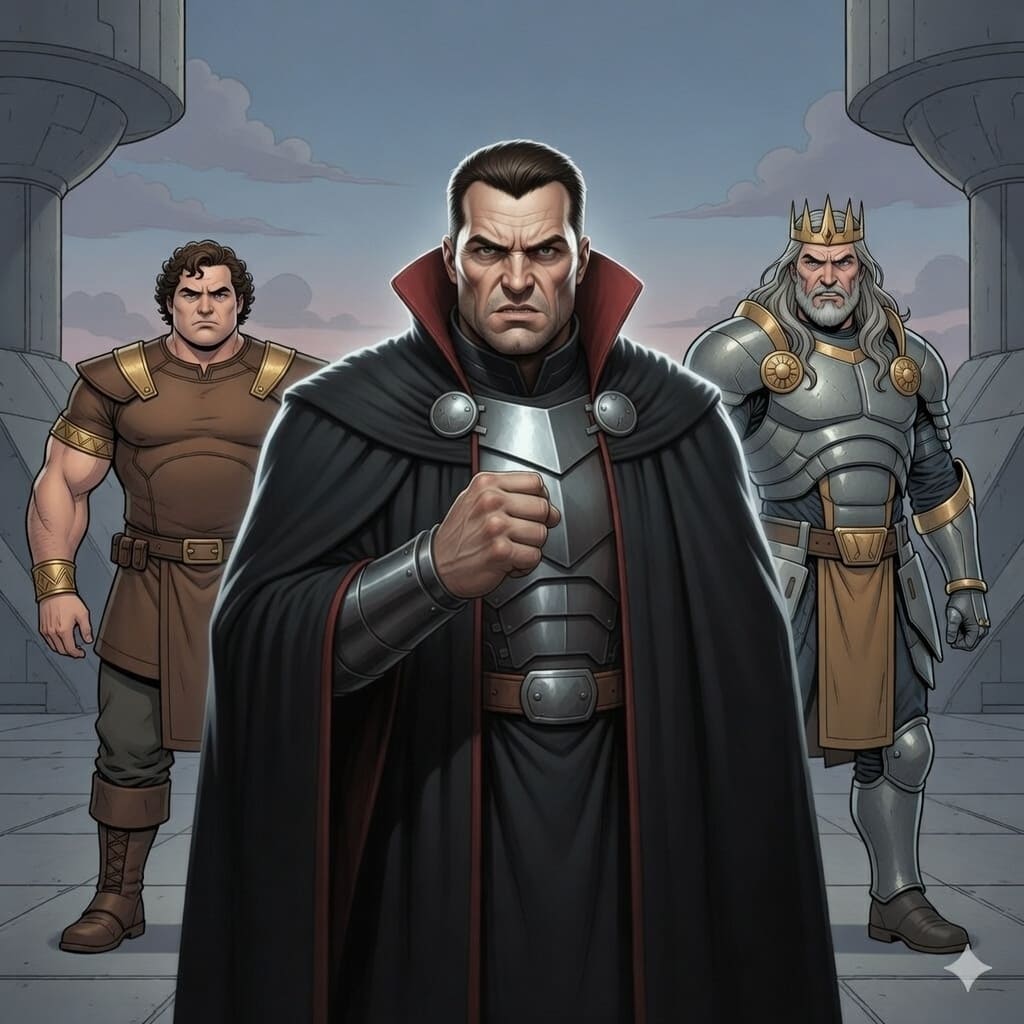
The newly validated trio — positioned left to right as Zootaroo, Donaldo, and Goodhat — was generated in a cinematic 16:9 composition with strict identity preservation instructions.
RMN Stars Robojit Desk
New Delhi | February 23, 2026
The Robojit AI-assisted production experiment has reached another structural milestone.
Following the successful stabilization and motion validation of its first core trio — Ginnie, Robojit, and Victorson — the project has now confirmed identity-consistent multi-character composition for its second power axis: Zootaroo, Donaldo, and Goodhat.
This marks the first time the Robojit Universe has achieved bilateral ensemble stability across two independent three-character groups using a controlled AI-assisted workflow.
From Single Characters to Ensemble Integrity
Most generative systems struggle when combining multiple original characters within one frame. Common issues include:
-
Facial drift
-
Proportion distortion
-
Costume redesign
-
Texture inconsistency
-
Hierarchy collapse
The Robojit pipeline is designed specifically to prevent these failures.
Each character was first locked in canonical form — with defined:
-
Facial geometry
-
Silhouette discipline
-
Costume architecture
-
Psychological posture
-
Lighting boundaries
Only after canonical stability was achieved were multi-character compositions attempted.
The Second Trio: Power, Conflict, and Hierarchy
The newly validated trio — positioned left to right as Zootaroo, Donaldo, and Goodhat — was generated in a cinematic 16:9 composition with strict identity preservation instructions.
The results confirmed:
-
Donaldo’s visual dominance through posture and framing
-
Zootaroo’s preserved heavy build and warrior stance
-
Goodhat’s regal authority and structural integrity
-
Accurate height hierarchy across all three
-
No costume reinterpretation
-
No facial redesign
This is not merely aesthetic success.
It is structural success.
Why This Matters
Character universes collapse when identity cannot survive multi-figure interaction.
For large-scale entertainment IP — whether graphic novels, animation, or film — ensemble stability is non-negotiable.
With both trios now validated independently, the Robojit Universe demonstrates:
-
Repeatable identity retention
-
Controlled compositional hierarchy
-
Lighting harmony across characters
-
Cross-frame canonical consistency
This transforms the project from “AI-generated visuals” into a controlled production system.
A Repeatable Pipeline Emerges
The Robojit methodology now includes:
-
Canonical character locking
-
Multi-character composition validation
-
Motion prototype testing
-
Public teaser deployment
-
Iterative documentation
Rather than relying on spontaneous generation, the project operates on structured validation checkpoints.
That structure is what makes scalability possible.
The Larger Implication
As the entertainment industry explores AI integration, the critical question is not whether images can be generated.
The real question is whether identity, hierarchy, and narrative chemistry can remain stable under generative pressure.
The Robojit experiment suggests that, with disciplined constraints and controlled prompting architecture, ensemble stability is achievable.
With two trios now confirmed, the project moves closer to full six-character ensemble composition — the next major test in its evolving pipeline.
The Robojit Universe is not being built as a one-off experiment.
It is being engineered as modular intellectual property.
And modular IP scales.
About Robojit and the Sand Planet
Robojit and the Sand Planet is an original, creator-owned science-fiction franchise developed by mediapreneur Rakesh Raman. Conceived as a long-form narrative universe, the project explores themes of intelligence, power, restraint, and identity through the lens of human and synthetic coexistence.
The Robojit initiative is currently being developed through an AI-assisted production pipeline, combining human authorship with emerging generative tools for visual prototyping, storytelling experiments, and transmedia exploration. The pipeline is an ongoing exercise and continues to evolve with each stage of development.
Robojit Website | IMDb | FilmFreeway | ISA | YouTube | Twitter (X) | Facebook