Designing Robojit: Creating a Canonical Superhero Image Through an AI-Assisted Production Pipeline
With Robojit’s canonical visual reference now established, the next steps will focus on additional core characters — including Victorson, Ginnie, and Donaldo — followed by early graphic novel layouts designed to test narrative flow, pacing, and visual consistency.
By Rakesh Raman
New Delhi | February 5, 2026
The Robojit and the Sand Planet project has always been conceived as a long-form, creator-led intellectual property. Long before the rise of generative AI tools, Robojit existed as a written narrative, with clearly defined characters, themes, and story arcs. What AI has changed is not the origin of Robojit, but the speed and flexibility with which its visual world can now be explored.
As the project moves toward a graphic novel prototype and other visual formats, one critical challenge has emerged: character consistency.
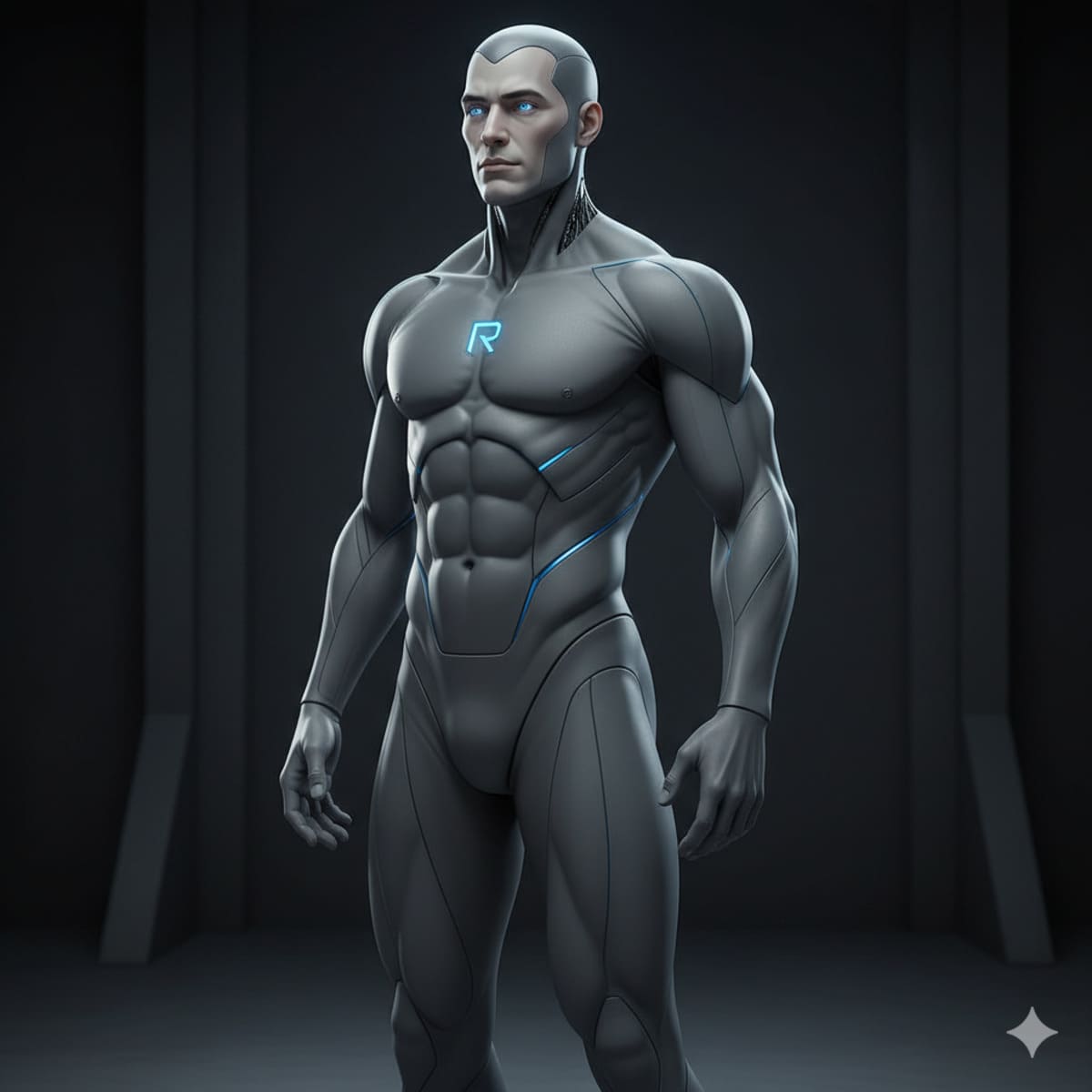
This article documents the creation of Robojit’s canonical representational image — a foundational step in the project’s evolving AI-assisted production pipeline.
Why a Canonical Image Matters
Graphic novels, films, and long-running franchises rely on a simple but essential concept:
visual continuity.
AI image generation platforms, while powerful, struggle to reproduce the same character reliably across multiple images. Facial proportions shift, design elements drift, and emotional cues become inconsistent. Without intervention, this makes long-form visual storytelling nearly impossible.
To address this, the Robojit project has adopted a character lock sheet approach — a standard industry practice in animation and film — adapted for AI-assisted workflows.
The goal is not to create final art, but to establish a visual reference anchor that guides all future representations of the character.
[ Grok Imagine and the Limits of AI Video Generation: How Robojit Crossed a Critical Threshold ]
Robojit: The Design Intent
Robojit is envisioned as a synthetic humanoid — visibly artificial, yet emotionally expressive. The character design emphasizes restraint over spectacle.
Key visual traits defined during this phase include:
-
Human-like face with expressive emotional range
-
Visible robotic elements that do not overpower the human form
-
Tall, athletic build (approximately 7 feet)
-
Calm, intelligent default demeanor
-
Slightly glowing eyes
-
Graphite body tone with blue accent highlights
-
Matte surface finish for a grounded, non-glossy look
-
A distinctive final chest mark: two mirrored “R” forms joined together
The guiding aesthetic principle is simple:
Robojit should feel powerful, yet restrained.
🔊 Robojit Canonical Superhero Image: Audio Analysis
The Role of AI — and Its Limits
The canonical image was generated using an AI image platform as part of an experimental workflow. While the output closely aligned with the intended design, certain details — such as the exact chest insignia — required iteration and compromise.
This is an important distinction.
AI did not design Robojit.
AI assisted in visualizing an already defined character.
The resulting image is therefore being disclosed clearly as a representational canonical image — a reference point rather than a final artistic statement. It will serve as a guide for future graphic panels, illustrations, and AI-assisted video experiments.
Positioning This Step in the AI-Assisted Production Pipeline
The Robojit pipeline currently spans multiple stages:
-
Human-authored narrative and character creation
-
Story world and thematic definition
-
AI-assisted visual prototyping (current stage)
-
Character lock sheets and consistency references
-
Graphic novel prototype development
-
Expanded visual and cinematic experimentation
The creation of Robojit’s canonical image marks a threshold moment — the transition from abstract design intent to repeatable visual identity.
Importantly, this pipeline is not fixed. It is an ongoing exercise, evolving as tools, workflows, and creative constraints change.
Each new character introduced into the Robojit universe will go through a similar documentation process, creating both creative clarity and public transparency.
What Comes Next
With Robojit’s canonical visual reference now established, the next steps will focus on additional core characters — including Victorson, Ginnie, and Donaldo — followed by early graphic novel layouts designed to test narrative flow, pacing, and visual consistency.
Rather than hiding the process, the Robojit project will continue to document it openly, treating creation itself as part of the story.
About Robojit and the Sand Planet
Robojit and the Sand Planet is an original, creator-owned science-fiction franchise developed by mediapreneur Rakesh Raman. Conceived as a long-form narrative universe, the project explores themes of intelligence, power, restraint, and identity through the lens of human and synthetic coexistence.
The Robojit initiative is currently being developed through an AI-assisted production pipeline, combining human authorship with emerging generative tools for visual prototyping, storytelling experiments, and transmedia exploration. The pipeline is an ongoing exercise and continues to evolve with each stage of development.
Robojit Website | IMDb | FilmFreeway | ISA | YouTube | Twitter (X) | Facebook