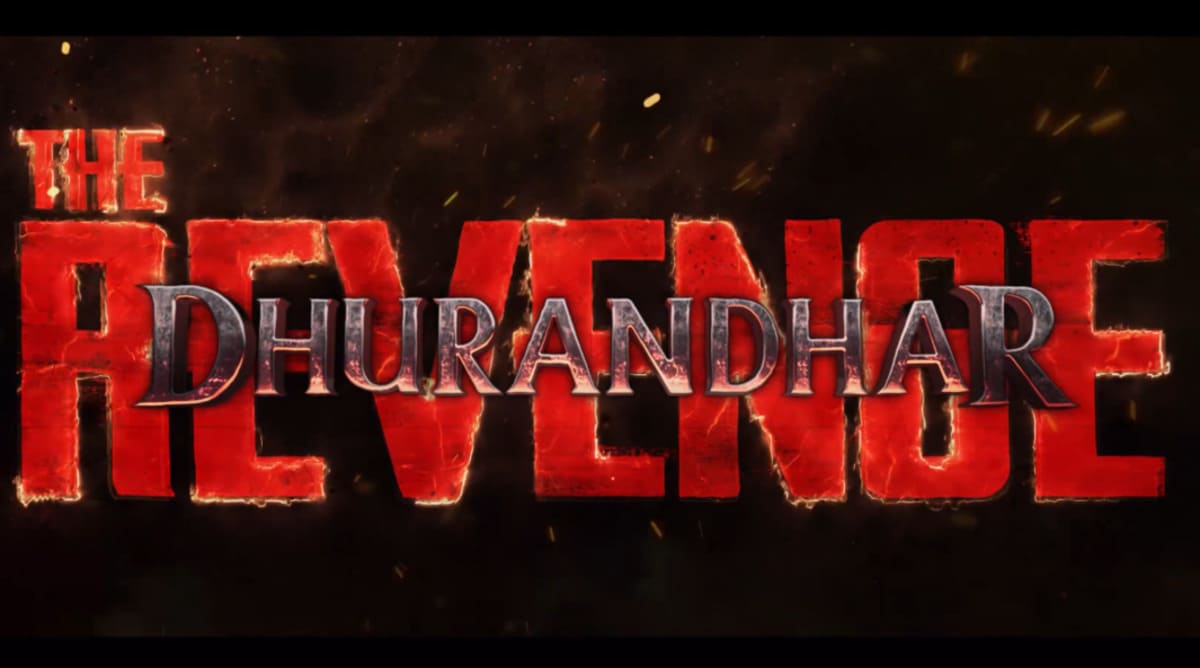
Dhurandhar: The Revenge — How Bollywood’s New Nationalism Turns Cinema into a Smokescreen
Nationalist war and action films appeal directly to a large domestic Hindu-majority audience using emotionally charged themes—sacrifice, vengeance, national pride, and an ever-present enemy.
By Rakesh Raman
New Delhi | February 3, 2026
The teaser for Dhurandhar: The Revenge has dropped, and with it arrives a familiar cocktail: neon-lit shootouts, exploding cars, bruising hand-to-hand combat—and a closing line designed to thunder long after the screen cuts to black:
“Yeh Naya Hindustan hai. Yeh ghar mein ghusega bhi. Aur maarega bhi.”
In 72 seconds, director Aditya Dhar signals exactly where the sequel is headed. Ranveer Singh returns as undercover operative Hamza (Jaskirat Singh Rangi), flanked by a formidable cast—Akshaye Khanna, Sanjay Dutt, R. Madhavan, Arjun Rampal, and Sara Arjun. The film is slated for a massive worldwide release on March 19, 2026, in Hindi, Telugu, Tamil, Kannada, and Malayalam, building on the first installment’s reported ₹1,300 crore global haul.
On the surface, Dhurandhar: The Revenge looks like another big-budget action spectacle. Beneath it, however, lies something far more consequential: the steady normalization of a political language that mirrors the ideological tone of India’s current power structure—and does so with commercial confidence.
Cinema as Ideological Echo Chamber
The teaser’s closing line is not accidental bravado. It echoes a rhetorical style that has become ubiquitous in contemporary political discourse—muscular, punitive, and framed as national self-assertion. The phrase “Naya Hindustan” has long ceased to be neutral. In public life, it functions as a moral divider: those inside the imagined nation versus those positioned as perpetual outsiders.
While the film does not name Pakistan or Muslims explicitly, the subtext is unmistakable. This is cinematic dog-whistling—coded hostility that requires no explanation to its intended audience. The enemy is externalized, racialized, and communalized, even when left unnamed.
From the lens of the Smokescreen political research framework, this is not just storytelling—it is narrative reinforcement. When institutions, media, and popular culture begin to echo the same ideological frequency, they help manufacture consent without the need for overt propaganda.
The Smokescreen 2026 report is a long-term investigative research project that examines how electoral opacity, institutional capture, media narrative control, and manufactured nationalism are used to sustain the illusion of democratic legitimacy in India despite systemic democratic backsliding.
🔊 धुरंधर नए राष्ट्रवाद का सियासी हथियार: ऑडियो विश्लेषण
The Business of Hyper-Nationalism
There is also a colder explanation for why Bollywood films like Dhurandhar: The Revenge keep getting made: they are seen as safe commercial bets.
Nationalist war and action films appeal directly to a large domestic Hindu-majority audience using emotionally charged themes—sacrifice, vengeance, national pride, and an ever-present enemy. In an increasingly polarized media environment, such films are often regarded as “easy money.”
Dhurandhar joins a growing list that includes Ikkis, Border 2, and Battle of Galwan—all variations of the same template. Different conflicts, similar messaging. Different protagonists, identical moral universes.
But what works domestically does not always travel well.
Global Pushback and Cultural Costs
The international consequences of this cinematic turn are already visible. Border 2 faced bans across Bahrain, Kuwait, Oman, Qatar, Saudi Arabia, and the UAE due to its perceived anti-Pakistan and anti-Muslim messaging. Dhurandhar, released in December 2025, reportedly encountered similar restrictions in several Gulf countries.
These bans are not about censorship alone; they reflect a broader global discomfort with Bollywood’s drift toward exclusionary nationalism—particularly when entertainment blurs into communal signaling.
For an industry that once prided itself on soft power, diaspora reach, and cultural pluralism, this trajectory carries long-term costs. Films that frame aggression as patriotism may rally applause at home, but they narrow India’s cultural appeal abroad.
The Smokescreen Effect
What makes Dhurandhar: The Revenge especially relevant is not its violence or scale—but its timing.
In an era marked by persistent questions about democratic integrity, institutional independence, and media complicity, hyper-nationalist cinema performs a convenient function. It redirects public emotion outward. It replaces scrutiny with spectacle. It converts political unease into cinematic catharsis.
This is the essence of the smokescreen: when loud symbols of strength obscure quieter questions of accountability.
That does not mean audiences should not watch Dhurandhar: The Revenge. It does mean they should watch it with open eyes—aware of the language it normalizes, the enemies it implies, and the political atmosphere it helps sustain.
Because when cinema repeatedly tells us who the enemy is, it also teaches us whom not to question.
And that, ultimately, is far more dangerous than any on-screen explosion.
By Rakesh Raman, who is a national award-winning journalist and social activist. He is the founder of a humanitarian organization RMN Foundation which is working in diverse areas to help the disadvantaged and distressed people in the society.