
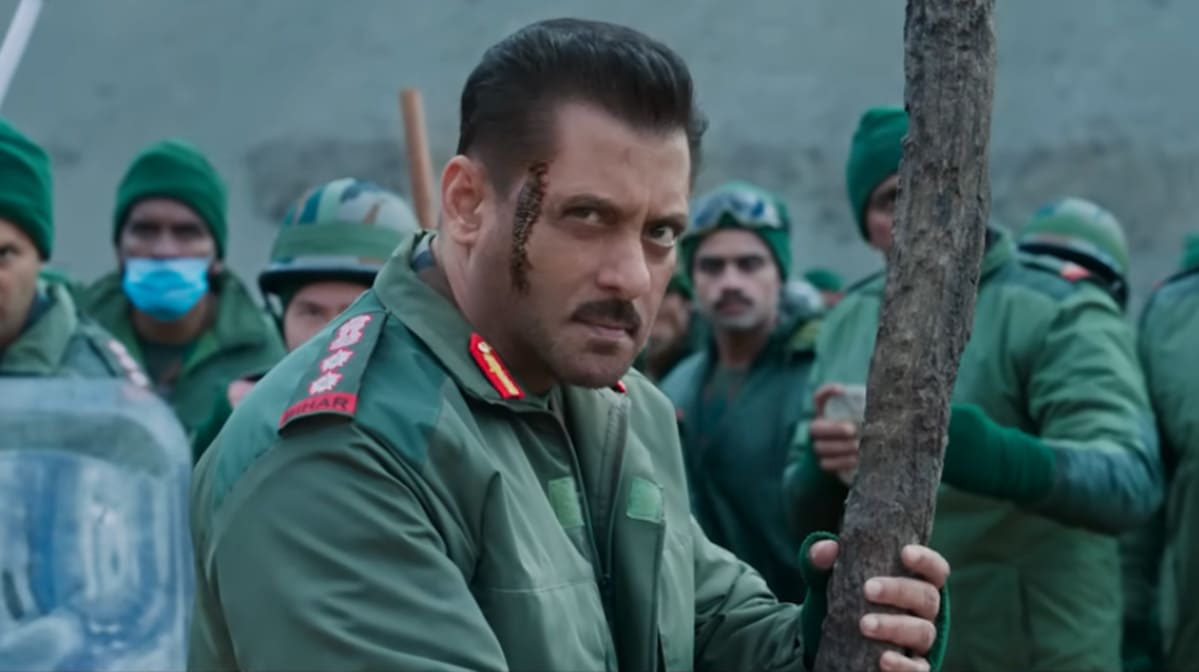
From Battle of Galwan to Maatrubhumi: How Salman Khan’s Cinematic Narrative Obscures Geopolitical Realities and PM Modi’s Failures
Historical accuracy in cinema is a volatile flashpoint for international diplomacy, particularly in contested territories where media is weaponized as state-sponsored psychological warfare.
By Rakesh Raman
New Delhi | March 16, 2026
1. The Cinematic Pivot: From Military Clash to “Maatrubhumi”
The strategic maneuvering to retitle the upcoming war drama from Battle of Galwan to Maatrubhumi: May War Rest in Peace is a calculated narrative pivot designed to sanitize a national trauma. By shifting from a specific military engagement—where 20 Indian soldiers were killed—to a generalized, emotionally charged sentiment of “Maatrubhumi” (Motherland), the production employs a tactical smokescreen to soften the focus on tactical military failures.
Set for an April 2026 release, the film’s domestic branding was intensified by the January 24, 2026, release of its title track. The song’s lyrics, specifically the “sankalp” (pledge) stating, “Maatrubhumi aaj mai sankalp lu tere liye, mai jiyoon tere liye aur mai marun tere liye,” function as a performative loyalty test, equating state-led geopolitical concessions with abstract personal sacrifice.
Under director Apoorva Lakhia, Salman Khan portrays Colonel Bikkumalla Santosh Babu of the 16 Bihar regiment alongside co-star Chitrangada Singh. However, Khan’s role transcends acting; he has effectively transitioned into an administrative toady for Prime Minister Narendra Modi. This institutional capture of Bollywood’s elite is driven by a survivalist instinct to avoid state-led reprisals, such as tax raids or investigative harassment.
Khan’s primary objective is to utilize his “invincible” screen persona to distort historical realities and protect the PM’s image from the fallout of border incursions. While the domestic audience is fed a diet of Maatrubhumi sentimentality, Beijing’s reaction suggests that India’s adversaries are not deceived by cinematic bravado.
2. The Geopolitical Counter-Narrative: Chinese Rejection and Distorted Realities
Historical accuracy in cinema is a volatile flashpoint for international diplomacy, particularly in contested territories where media is weaponized as state-sponsored psychological warfare. The Chinese state apparatus has recognized Maatrubhumi as such a tool, responding with aggressive dismissal. Chinese state media and regional experts have characterized the production as an entertainment-driven, “emotionally exaggerated” distortion of the 2020 encounter.
“No amount of cinematic exaggeration can alter history or weaken the People’s Liberation Army’s (PLA) territorial resolve.” — The Global Times
The film’s “heroic” premise is a stark departure from the grim realities documented in geopolitical assessments. While the film manufactures a narrative of “Indian victory” to bolster the Modi regime, it deliberately obscures the fact that the Chinese army successfully occupied and continues to hold approximately 38,000 square kilometers of Indian land in Ladakh. The Galwan Valley is a high-altitude region in Ladakh.
🔊 सलमान खान की बॉलीवुड फिल्म ‘मातृभूमि’ बैटल ऑफ गलवान का झूठ: ऑडियो विश्लेषण
Even the Chinese public has joined the fray, teasing Khan—known to them from Bajrangi Bhaijaan—for his penchant for “invincible” roles and “exaggerated” visual effects that simplify complex military defeats into hollow triumphs. This chasm between cinematic fiction and reality is further widened by the specialist accounts emerging from the highest echelons of the Indian military.
3. The Naravane Memoir: Documenting Incompetence and Territorial Loss
Strategic military memoirs, such as General Manoj Naravane’s Four Stars of Destiny, provide a specialist’s take that systematically dismantles high-gloss political rhetoric. As the 28th Chief of the Army Staff and a highly decorated officer, Naravane’s 448-page account offers a professional counterpoint to the sanitized, “invincible” narrative promoted by the Modi administration and its cinematic toadies.
The emergence of the memoir’s details triggered a significant “ruckus” in the Lok Sabha. Leader of the Opposition Rahul Gandhi, citing investigative reporting from The Caravan, used Naravane’s assertions to challenge the government’s silence on China. This led to a heated exchange where Defence Minister Rajnath Singh and Home Minister Amit Shah questioned the authenticity of the memoir, despite it being available on Amazon. The core allegations suppressed by the state include:
- Tactical Vulnerability: Chinese tanks were positioned within a few hundred meters of Indian troops on the Kailash range, exposing a precarious defensive posture.
- Executive Failure: The memoir details specific instances of incompetence by the Modi administration in managing the 2020 standoff.
- Territorial Concession: The administration effectively surrendered approximately 38,000 square kilometers of Indian territory in Ladakh to Chinese occupation.
The systematic suppression and non-publication of this memoir within India facilitate the rise of cinematic propaganda. By denying the public access to a specialist’s account of military surrender, the state creates an informational vacuum filled by state-sanctioned fiction.
4. The “Smokescreen” Framework: Manufactured Nationalism and Institutional Capture
The “Smokescreen” effect serves as a vital tool for sustaining the illusion of democratic legitimacy while masking systemic institutional failures. This strategy ensures that when the government fails to protect territorial integrity, it can redirect public focus toward emotional spectacles. The “Smokescreen 2026” research project offers a sobering diagnosis of the current political stalemate in India.
The Smokescreen Strategy vs. Geopolitical Reality
| The Smokescreen Strategy | Impact on Geopolitical Reality |
| Symbolic Nationalism: Utilizing the “sankalp” of Maatrubhumi to equate dissent with a lack of patriotism. | Obscures the “sheepish” ignoring of the 38,000 sq km occupation by Chinese forces. |
| One-Man Audience: Producing cinematic content specifically designed to validate PM Modi’s version of history. | Ensures that institutional failures are repackaged as individual acts of martial heroism. |
| Performative Loyalty Tests: Forcing actors like Salman Khan to align with the regime to avoid tax raids and harassment. | Results in the total capture of cultural institutions, turning Bollywood into a state mouthpiece. |
This strategy is reinforced by a surfeit of similar propaganda films, including Dhurandhar, Ikkis, and Border 2. These productions are “easy money” generators, as they target a pre-conditioned Hindu-majority market with low-risk, high-reward patriotic tropes. For actors needing state protection, these films provide commercial certainty while portraying the regime’s version of events as absolute truth.
However, this manufactured nationalism has diplomatic costs; films like Border 2 and Dhurandhar have already been banned in Bahrain, Kuwait, Oman, Qatar, Saudi Arabia, and the UAE due to anti-Muslim and xenophobic content. This global blowback demonstrates that the smokescreen intended to blind the domestic public is clearly visible—and rejected—on the international stage.
5. The Erosion of Truth in the Age of Cinematic Propaganda
The transformation of the Galwan tragedy into the cinematic spectacle Maatrubhumi is a textbook example of how popular culture is weaponized to protect a failing political leadership. By prioritizing abstract patriotism and individual sacrifice, the film functions as a cultural shield designed to insulate Narendra Modi from the reality of military surrender and the ongoing loss of 38,000 square kilometers of land to China.
When the silver screen ceases to challenge power and instead becomes a “smokescreen” for geopolitical concessions and leadership incompetence, the victim is not just historical accuracy, but the democratic accountability of the nation. The danger of this age is not the fiction itself, but the state’s success in ensuring that the fiction is the only narrative the public is permitted to see.
By Rakesh Raman, who is a national award-winning journalist and founder of the humanitarian organization RMN Foundation. As an emerging international screenwriter, his work is gaining visibility on leading entertainment industry platforms, including IMDb and the International Screenwriters’ Association (ISA).
He is building AI-assisted, manufacturing-style production pipelines for his global film and entertainment projects including the humanoid superhero transmedia IP ROBOJIT AND THE SAND PLANET and the research-based political thriller THE SMOKESCREEN which is envisioned as the first installment in a broader cinematic universe.