Lahore 1947: Bollywood’s Partition Obsession and the Politics of Manufactured Nationalism
Lahore 1947, centered on a Muslim family migrating to Pakistan, arrives at a moment when Indian Muslims continue to face heightened social, political, and institutional marginalization.
By Rakesh Raman
New Delhi | February 9, 2026
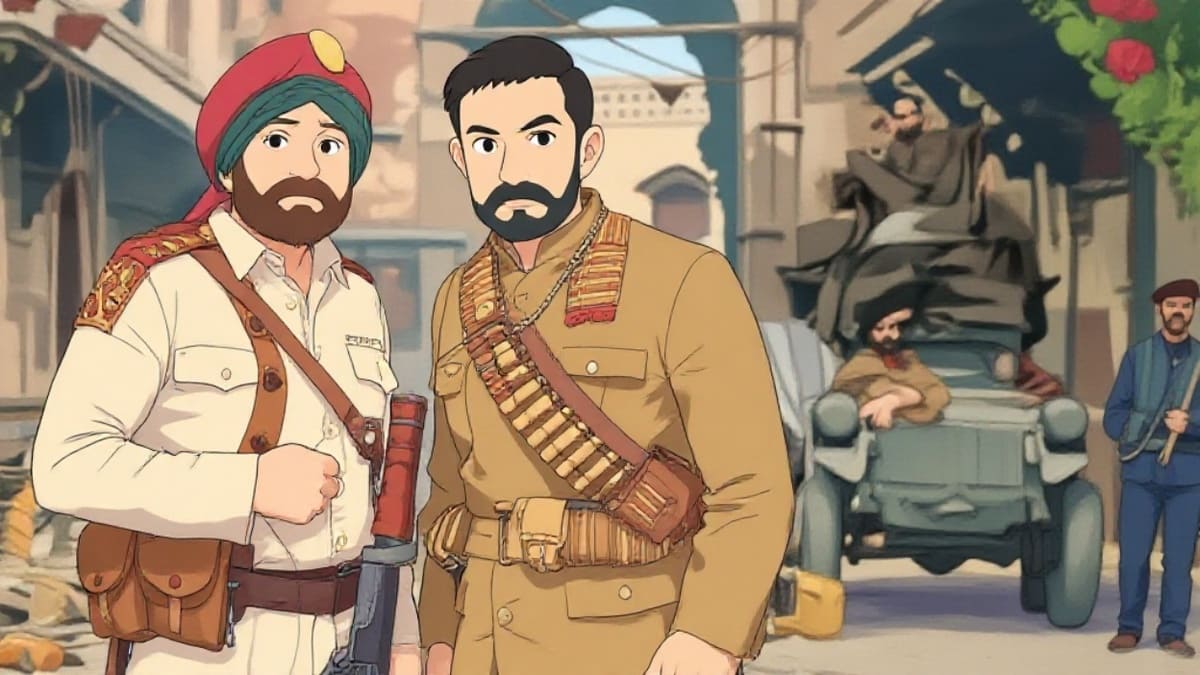
Aamir Khan Productions has announced that its upcoming period drama Lahore 1947 will release in theatres on August 13, strategically timed to coincide with India’s Independence Day week. The film reunites Sunny Deol, director Rajkumar Santoshi, and producer Aamir Khan for the first time and is set against the backdrop of the 1947 Partition, narrating the story of a Muslim family migrating from Lucknow to Lahore.
On the surface, Lahore 1947 appears to be another historical drama revisiting one of the most traumatic episodes of the subcontinent’s past. But its timing, thematic choices, and placement within a growing pattern of nationalist and Pakistan-centric Bollywood productions raise deeper questions—especially when viewed in the current political climate.
Over the past few years, mainstream Hindi cinema has shown an increasing dependence on hyper-nationalist narratives and Pakistan-linked storylines. Films such as Dhurandhar, Ikkis, Border 2, Battle of Galwan, and now Lahore 1947 reflect a creative ecosystem struggling with originality while gravitating toward ideologically “safe” subjects.
The recurrence of Pakistan as a narrative foil mirrors contemporary electoral politics, where Prime Minister Narendra Modi’s campaign speeches routinely invoke Pakistan as a rhetorical adversary—often in the absence of any comparable provocation from across the border.
This convergence of political rhetoric and cinematic storytelling is not accidental.
In today’s India, nationalism has become a marketable aesthetic. Films wrapped in patriotic symbolism, military valor, and historical grievance enjoy not just box-office viability but also political insulation. They rarely face the scrutiny applied to works that question state power, institutional failures, or democratic erosion. Within this ecosystem, communal subtexts—particularly those reinforcing suspicion toward Muslims—are frequently normalized, even when presented as historical realism.
Lahore 1947, centered on a Muslim family migrating to Pakistan, arrives at a moment when Indian Muslims continue to face heightened social, political, and institutional marginalization. While stories of Partition are legitimate and necessary, the selective retelling of history—repeatedly framed through binaries of loyalty, nationalism, and civilizational rupture—risks reinforcing contemporary prejudices rather than fostering understanding.
Seen through the lens of the Smokescreen 2026 report, this pattern becomes more troubling. The Smokescreen project is a long-term investigative research initiative examining how electoral opacity, institutional capture, media narrative control, and manufactured nationalism combine to sustain the illusion of democratic legitimacy in India despite clear signs of democratic backsliding. One of its key findings is the role of cultural production—particularly mass media and cinema—in amplifying state-aligned narratives while crowding out dissenting or inconvenient perspectives.
Bollywood’s growing fixation on nationalist spectacles fits neatly into this framework. When electoral accountability weakens and institutions lose credibility, symbolism replaces substance. Patriotism becomes performance. History becomes a tool, not a lesson. Films timed around national holidays, infused with communal undertones, and promoted as cultural events rather than artistic works contribute to this broader narrative management.
🔊 बॉलीवुड फिल्म ‘लाहौर 1947’ का राजनीतिक प्रोपेगेंडा: ऑडियो विश्लेषण
This does not imply a coordinated conspiracy between filmmakers and the state. Rather, it reflects a climate of self-censorship, incentive alignment, and ideological convergence. In an environment where questioning power invites backlash and compliance is rewarded, creative choices inevitably tilt toward narratives that affirm the dominant political mood.
The danger lies not in a single film, but in repetition. When cinema repeatedly frames national identity through exclusion, grievance, and perpetual hostility—especially toward Muslims and Pakistan—it normalizes a worldview that serves political ends while impoverishing artistic expression.
As Lahore 1947 heads to theatres amid Independence Day celebrations, the question is not whether such films have the right to exist. It is whether Indian cinema, once known for its plurality and imagination, is surrendering its critical voice to the comforts of state-sanctioned nationalism—becoming yet another layer in the smokescreen obscuring deeper democratic decay.
By Rakesh Raman, who is a national award-winning journalist and social activist. He is the founder of a humanitarian organization RMN Foundation which is working in diverse areas to help the disadvantaged and distressed people in the society.