Maatrubhumi and the Politics of Patriotism: How Battle of Galwan Fits India’s Cinematic Smokescreen
Battle Of Galwan, Bollywood Nationalism, And The Smokescreen Effect
As Battle of Galwan marches toward its April 2026 release, the debate is no longer just about a film or a song. It is about the role of popular culture in a democracy: whether cinema should challenge power or comfort it, illuminate reality or help conceal it.
By Rakesh Raman
New Delhi | January 25, 2026
The release of the song Maatrubhumi from the upcoming war film Battle of Galwan on January 24—just days ahead of Republic Day 2026—has reignited an old and uncomfortable question in India’s entertainment industry: where does patriotism end and political propaganda begin?
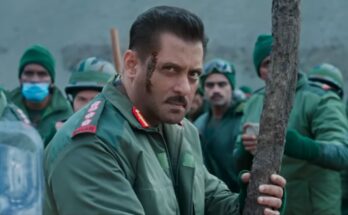
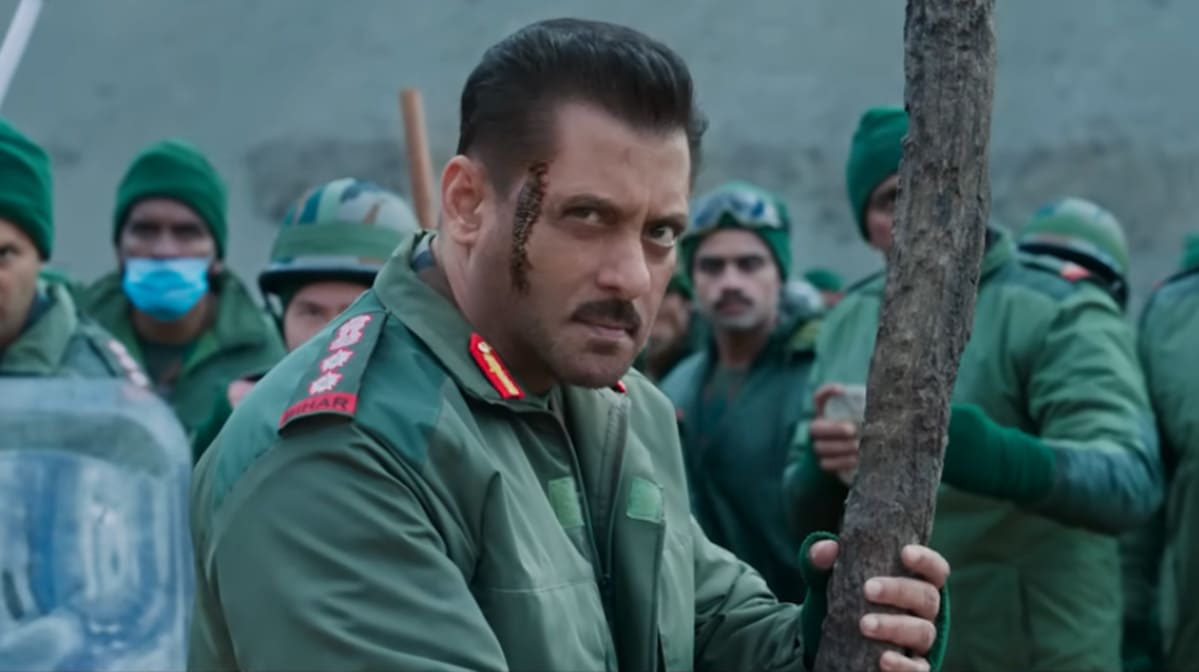
Starring Salman Khan and Chitrangada Singh, Battle of Galwan is scheduled for an April 2026 theatrical release. The film is set against the backdrop of the deadly 2020 Galwan Valley clash between Indian and Chinese troops, in which 20 Indian soldiers lost their lives. Khan portrays Colonel Bikkumalla Santosh Babu of the Indian Army’s 16 Bihar regiment, a figure widely remembered for his sacrifice.
The newly released song Maatrubhumi is a sweeping, emotionally charged tribute to the idea of motherland. Its central lyric—“Maatrubhumi aaj mai sankalp lu tere liye, mai jiyoon tere liye aur mai marun tere liye” (Motherland, today I take a pledge for you; I will live for you and I will die for you)—leaves little ambiguity about the film’s ideological pitch. The visuals reinforce this message, showing Salman Khan working closely with authorities and acting decisively in the national interest, framing the narrative around sacrifice, courage, and unquestioned loyalty to the state.
On the surface, this is familiar territory for Bollywood war cinema. But placed in the current political context—and viewed through the lens of The Smokescreen report—the timing, tone, and messaging of Battle of Galwan raise deeper concerns.
The Smokescreen 2026 report is a long-term investigative research project that examines how electoral opacity, institutional capture, media narrative control, and manufactured nationalism are used to sustain the illusion of democratic legitimacy in India despite systemic democratic backsliding.
A Film Caught in a Geopolitical Crossfire
Even before its release, Battle of Galwan has attracted international controversy. When the trailer dropped in December 2025, Chinese state media—including The Global Times—accused the film of distorting historical facts and promoting an entertainment-driven, emotionally exaggerated portrayal of the Galwan clash. Chinese experts dismissed the project as incapable of rewriting history or weakening the People’s Liberation Army’s resolve on territorial issues.
🔊 बैटल ऑफ गलवान और भारतीय सिनेमा में बढ़ते राष्ट्रवाद और राजनीतिक प्रचार: ऑडियो विश्लेषण
The Indian government, for its part, defended the film as an exercise of artistic freedom, with official sources stating on December 30 that filmmakers have the right to express themselves without interference.
Yet the sharpest criticism has arguably come from within India itself.
“Cinematic Propaganda” and Selective Nationalism
Domestic critics have labelled Battle of Galwan a textbook case of “cinematic propaganda.” They argue that while the film amplifies a heroic narrative of sacrifice and resolve, it conspicuously avoids uncomfortable political realities—most notably, the continued Chinese occupation of approximately 38,000 square kilometres of Indian territory in Ladakh.
According to these critics, the contradiction is glaring. Prime Minister Narendra Modi regularly adopts an aggressive rhetorical posture toward Pakistan, a far weaker adversary, yet remains publicly restrained—if not silent—on China, even after the Galwan deaths and the ongoing territorial standoff. In this context, a big-budget Bollywood spectacle celebrating martial nationalism appears less like fearless storytelling and more like strategic distraction.
This is where The Smokescreen framework becomes relevant. The report documents how symbolic nationalism, emotional spectacles, and media-driven narratives are repeatedly deployed to obscure institutional failures, policy paralysis, and inconvenient facts. Battle of Galwan, critics argue, functions as cultural reinforcement of this smokescreen—redirecting public emotion toward cinematic bravery while real geopolitical questions remain unanswered.
Bollywood, Power, and the Fear of Reprisals
The controversy also highlights a growing unease about Bollywood’s relationship with political power. Filmmakers are increasingly accused of acting as “toadies of the Modi regime,” motivated less by creative conviction and more by fear of state-led reprisals such as tax raids, investigations, or regulatory harassment.
In this reading, nationalist films are produced for a “one-man audience”—Prime Minister Modi—serving as performative loyalty tests rather than independent works of art. By aligning themselves with the ruling BJP’s ideological narrative, filmmakers seek protection and commercial certainty in an increasingly hostile environment for dissent.
Easy Money, Majoritarian Markets
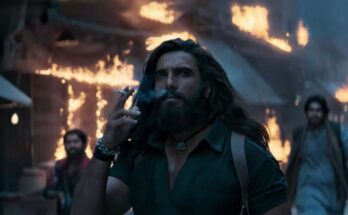
Nationalist war films also make commercial sense. By appealing to the domestic Hindu-majority audience with emotionally charged themes of sacrifice, enemies, and national pride, such productions are seen as “easy money.” Films like Dhurandhar, Ikkis, Border 2, and now Battle of Galwan follow a similar template—foregrounding hyper-nationalism while casting neighbouring countries and minority communities as implicit or explicit adversaries.
However, this strategy has consequences beyond India’s borders. Border 2 was banned in Bahrain, Kuwait, Oman, Qatar, Saudi Arabia, and the UAE due to its perceived anti-Pakistan and anti-Muslim content. Similarly, Dhurandhar, released in December 2025, was barred from release in several Gulf countries for comparable reasons.
These bans underline a growing global discomfort with Bollywood’s turn toward exclusionary nationalism—particularly when it crosses into communal or xenophobic messaging.
Patriotism or Performance?
Maatrubhumi is undeniably powerful in its emotional appeal. It honours sacrifice, valor, and the idea of national duty—sentiments that resonate deeply in any society. But when such expressions are repeatedly packaged within politically convenient narratives, their authenticity comes into question.
As Battle of Galwan marches toward its April 2026 release, the debate is no longer just about a film or a song. It is about the role of popular culture in a democracy: whether cinema should challenge power or comfort it, illuminate reality or help conceal it.
In an era of carefully managed optics and manufactured patriotism, the line between tribute and tool is becoming increasingly thin. And that, perhaps, is the most telling subtext behind Maatrubhumi and the spectacle surrounding Battle of Galwan.
By Rakesh Raman, who is a national award-winning journalist and social activist. He is the founder of a humanitarian organization RMN Foundation which is working in diverse areas to help the disadvantaged and distressed people in the society.