The Divine Smokescreen: How Bollywood’s ₹4,000 Crore ‘Ramayana’ Retells the Script of Autocracy
Ramayana is not just a film; it is a narrative bridge between the 2019 Ayodhya verdict and the continued autocratization of India.
By Rakesh Raman
New Delhi | April 3, 2026
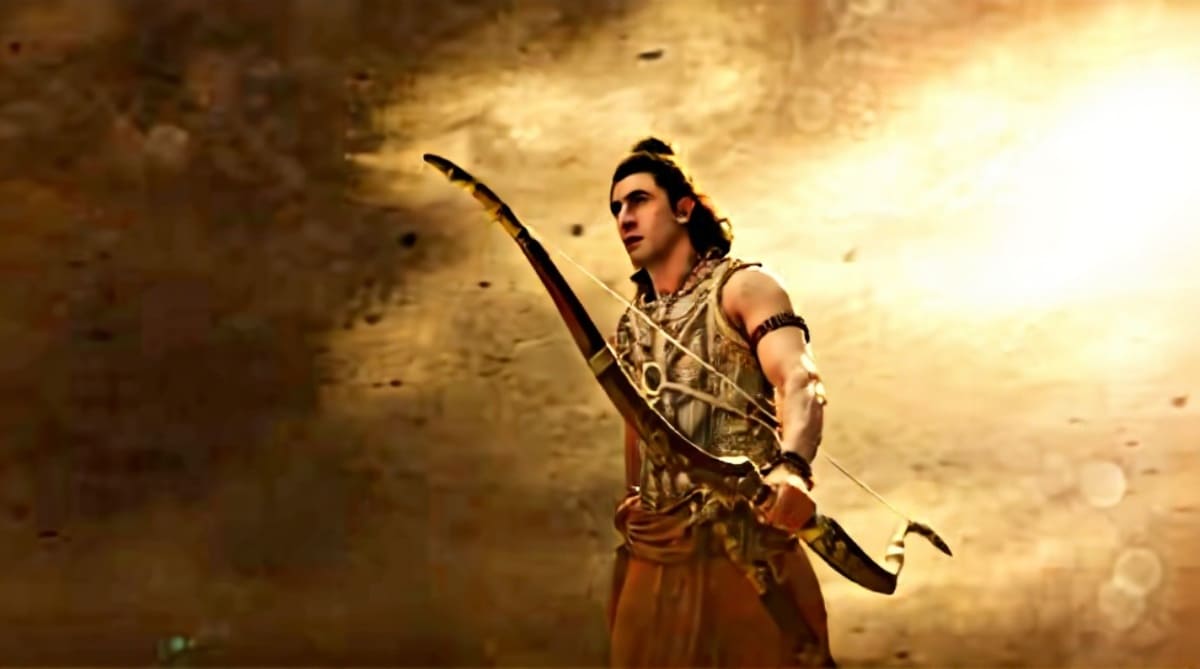
On April 2, 2026, coinciding with Hanuman Jayanti, the “Rama glimpse” of Namit Malhotra’s massive cinematic project, Ramayana, was unveiled to a global audience. While the film is being billed as India’s answer to Avatar and The Lord of the Rings, a forensic look behind the CGI reveals a deeper, more dangerous narrative: the weaponization of Hindu mythology to sustain the political cult of Narendra Modi.
1. The One-Man Audience: Rama as a Political Proxy
The timing of Ramayana is no coincidence. Since the January 22, 2024, inauguration of the Ram Temple in Ayodhya—built on the site of the former Babri Masjid following a controversial 2019 Supreme Court order—Modi has positioned himself not just as a Prime Minister, but as the modern custodian of the Rama legacy.
By making movies centered on Rama, Bollywood is moving beyond simple nationalism into Religious Demagoguery. These films are crafted to please a “one-man audience” in New Delhi, allowing Modi to project a “demigod” persona while masking his inability to provide intellectual governance to 1.4 billion Indians.
2. Data Laundering: The ₹4,000 Crore Mirage
Just as we documented with the fraudulent figures of Dhurandhar, the Ramayana production is already making unverifiable financial claims:
-
The Claim: A combined budget of ₹4,000 crore ($500 million) for two parts.
-
The Reality: There is no transparent audit of these figures. Such astronomical numbers are used to “hoodwink” stakeholders and create a false sense of “Historical Scale.” This is Financial Smoke and Mirrors—using high-sounding numbers to justify the regime’s narrative of a “New Era” under Modi.
3. The “Nepo” Savior and Narrative Building
The casting of Ranbir Kapoor (descendant of the Kapoor dynasty) as Lord Rama and Sunny Deol as Hanuman further integrates “Old Bollywood” royalty with the current regime’s propaganda machine. Deol, a former BJP MP, remains a key figure in building the hyper-militant nationalist narratives the regime relies on.
🔊 रामायण: सिनेमाई चकाचौंध में छिपी राजनीतिक सत्ता का खेल: ऑडियो विश्लेषण
By hiring Hollywood talent like Hans Zimmer alongside AR Rahman, the makers are attempting to “Internationalize” the propaganda. They want to convince the world that this religious retelling is a global cinematic milestone, rather than a domestic tool for Electronic Voting Machine (EVM) manipulation and voter polarization.
4. From Cinema to the Ballot Box
The RMN Foundation notes that the release schedule—October 2026 (Diwali) for Part One and October 2027 for Part Two—perfectly aligns with the regime’s election cycles. By keeping the “Rama” name in the headlines through high-octane VFX and celebrity devotion, the Modi-BJP machinery ensures that the “Smokescreen” remains thick, hiding the “Global Democratic Decay” and the misery of the Indian population.
Conclusion: The New Era of Culture Poisoning
Ramayana is not just a film; it is a narrative bridge between the 2019 Ayodhya verdict and the continued autocratization of India. When a religious demagogue prostrates in temples to show divinity, while his industry lackeys spend unverified billions to film his favorite deities, the result is not art—it is Culture Poisoning.
The world must recognize that the ” Rama glimpse” is actually a glimpse into the future of a controlled, non-intellectual society where mythology replaces policy.
By Rakesh Raman, who is a national award-winning journalist and social activist. He is the founder of the humanitarian organization RMN Foundation which is working in diverse areas to help the disadvantaged and distressed people in the society.