
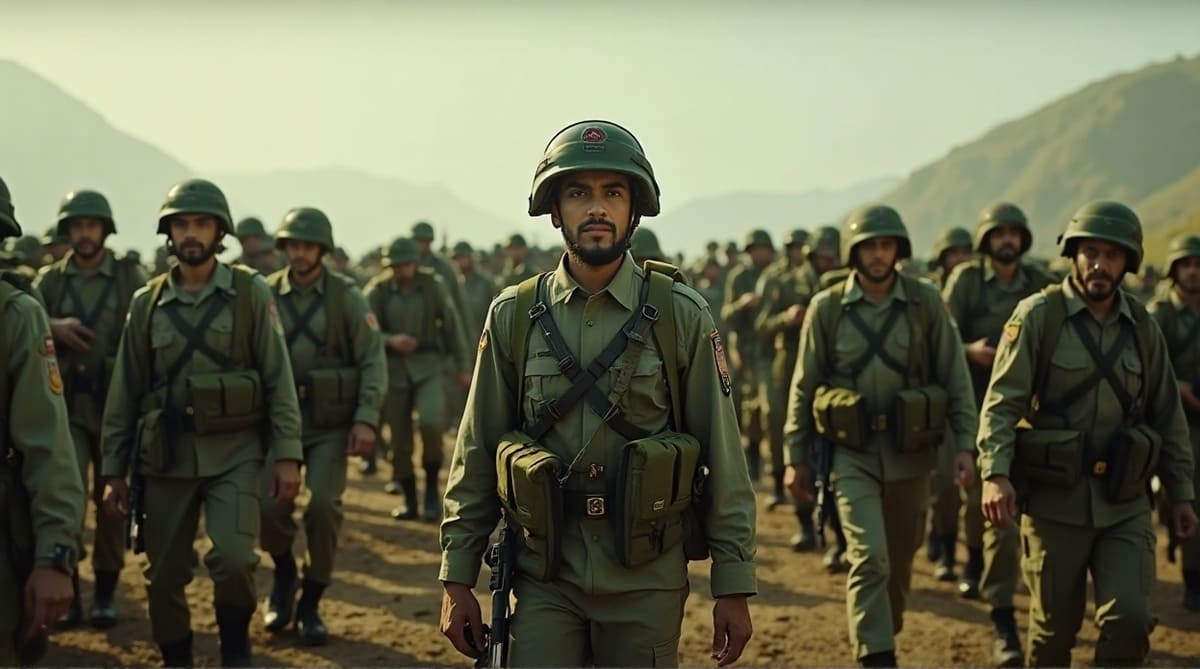
Border 2: Beyond the Battlefield and Truth Behind Bollywood’s New War Movies
The coming wave of nationalist cinema, led by blockbusters like Border 2, is more than just entertainment. It is a key component of a larger political strategy designed to shape and control public discourse.
By Rakesh Raman
New Delhi | January 22, 2026
Introduction: More Than Just a Movie
The announcement of Border 2, a sequel to the 1997 cult classic, has already generated significant buzz. Scheduled for release on Republic Day weekend 2026, the film promises an epic multi-front narrative of the 1971 India-Pakistan War, poised to be a major blockbuster. The original film captured a generation, and the sequel is set to do the same.
But beyond the box-office predictions and nostalgic anticipation lies a more pressing question. What if the recent surge in nationalist, Pakistan-centric war films is not merely a creative trend in Bollywood? What if it represents a calculated component of a much larger, more complex political strategy? A closer look at films like Border 2 reveals surprising truths about the current state of Indian politics, public discourse, and the very health of its democracy.
1. Nationalism is a Family Business
To understand its political utility, one must first recognize Border 2 for what it is at its core: a product of Bollywood’s deeply entrenched dynastic system. Like much of the industry, the film operates as a family fiefdom, with a cast crowded by the relatives of established figures. This structure not only obstructs the entry of new talent but creates an insular ecosystem where lineage trumps originality.
The film’s lead cast is a masterclass in this dynastic dynamic:
- Sunny Deol (Lt Col Fateh Singh Kaler): Son of legendary actor Dharmendra.
- Varun Dhawan (Major Hoshiar Singh Dahiya): Son of renowned director David Dhawan.
- Ahan Shetty (Lt Cdr M. S. Rawat): Son of Suniel Shetty, who starred in the original Border.
- Akshaye Khanna (Cameo as 2nd Lt Dharamvir): Son of the late actor and politician Vinod Khanna.
- Suniel Shetty (Cameo as AC Bhairon Singh): His appearance alongside his son marks a notable multi-generational family presence.
This reliance on lineage underscores a fundamental issue within the industry, as one analysis bluntly puts it:
If they are not working in films because of their family lineage, they will be jobless.
2. The “Cheap Formula” Propaganda Playbook
This artistic vacuum, created by a dynastic system that stifles innovation, makes the industry ripe for a cynical solution: the “cheap formula.” As filmmakers struggle with originality, many are turning to a playbook of cinema centered on exaggerated military conflicts and animosity with Muslim-majority Pakistan. This is not an isolated event but a clear, coordinated wave.
Other upcoming titles follow this same script, including Ikkis, Dhurandhar (2025) and its sequel (March 2026), Battle of Galwan (April 2026), and Love & War (late 2026). These films serve a distinct political purpose by reinforcing the ruling regime’s narrative. By focusing on anti-Pakistan sentiment, they appeal directly to the majority Hindu audience, a strategy that can indirectly stigmatize Muslims living within India.
3. The Great Diversion: Cinema as a “Smokescreen”
This cinematic machinery, therefore, serves a singular, potent function: political misdirection. These films act as a “smokescreen,” a tool used to create manufactured crises that divert public attention from more critical domestic issues. A prime example is the government’s “Operation Sindoor,” launched after the Pahalgam attack, in which the Modi government immediately accused Pakistan without providing evidence.
🔊 बॉर्डर 2 और बॉलीवुड की नई वॉर फिल्मों के पीछे की सच्चाई: ऑडियो विश्लेषण
The allegation was met with serious skepticism; senior Congress leader and former Home Minister P. Chidambaram alleged the attackers were homegrown and even accused the regime of involvement. These accusations gained traction for a chilling reason: the attackers were never apprehended, and no independent investigation was permitted.
This is where cinema becomes a powerful instrument. While citizens are occupied with debates over film disclaimers, military heroism, and national pride, the deeper, more urgent questions about the health of the democracy are pushed to the sidelines. Specifically, serious allegations of election fraud conducted through manipulated electronic voting machines (EVMs) fail to gain sustained public traction. The “Vote Chor Gaddi Chhod” campaign, which directly accuses the Prime Minister of election theft, highlights the gravity of these concerns, yet they remain on the periphery of mainstream discourse.
This synthesis of entertainment and political messaging is not accidental but part of a coordinated pattern.
The Ikkis disclaimer, therefore, is not an isolated controversy. It is another data point in a larger pattern where cinema, media, military rhetoric, and manufactured hatred operate together to mask what the Smokescreen project identifies as the core engine of India’s democratic collapse: election manipulation through EVMs.
Conclusion: Are We Watching a Film or an Illusion?
The coming wave of nationalist cinema, led by blockbusters like Border 2, is more than just entertainment. It is a key component of a larger political strategy designed to shape and control public discourse. By channeling national focus toward external threats and cinematic heroism, it effectively diverts attention from fundamental questions about electoral integrity and democratic accountability.
This raises a final, crucial question for the audience. As long as public debate is hijacked by fear and carefully crafted propaganda, are we simply watching an election, or is democracy itself becoming a carefully staged illusion?
By Rakesh Raman, who is a national award-winning journalist and social activist. He is the founder of a humanitarian organization RMN Foundation which is working in diverse areas to help the disadvantaged and distressed people in the society.