From Concept to Canon: Locking Robojit, Victorson, and Ginnie in an AI-Assisted Production Pipeline
By locking identity before scaling output, Robojit and the Sand Planet continues to evolve as an AI-assisted but author-driven narrative universe.
RMN Stars Movies Desk
New Delhi | February 13, 2026
The development of Robojit and the Sand Planet has entered a significant new phase.
What began as exploratory visual prototyping has now evolved into a structured character stabilization process. Three primary characters — Robojit, Victorson, and Ginnie — have now been visually locked through a disciplined AI-assisted production workflow.
This marks an important transition: from experimentation to controlled world-building.
Why Character Locking Matters
In traditional studio environments, characters are “locked” before moving into animation, comics, or long-form visual storytelling. This prevents visual drift, tonal inconsistency, and narrative confusion.
In an AI-assisted workflow, this step becomes even more critical.
Generative systems are powerful but interpretive. Without constraints, characters subtly change across iterations — proportions shift, facial tone drifts, posture evolves, and personality cues blur.
To prevent this, each character in the Robojit universe now has:
-
A canonical full-body image
-
A defined physical specification
-
Personality-based visual rules
-
A list of prohibited deviations
This creates a structured bridge between human authorship and machine assistance.
Robojit: The Power Anchor
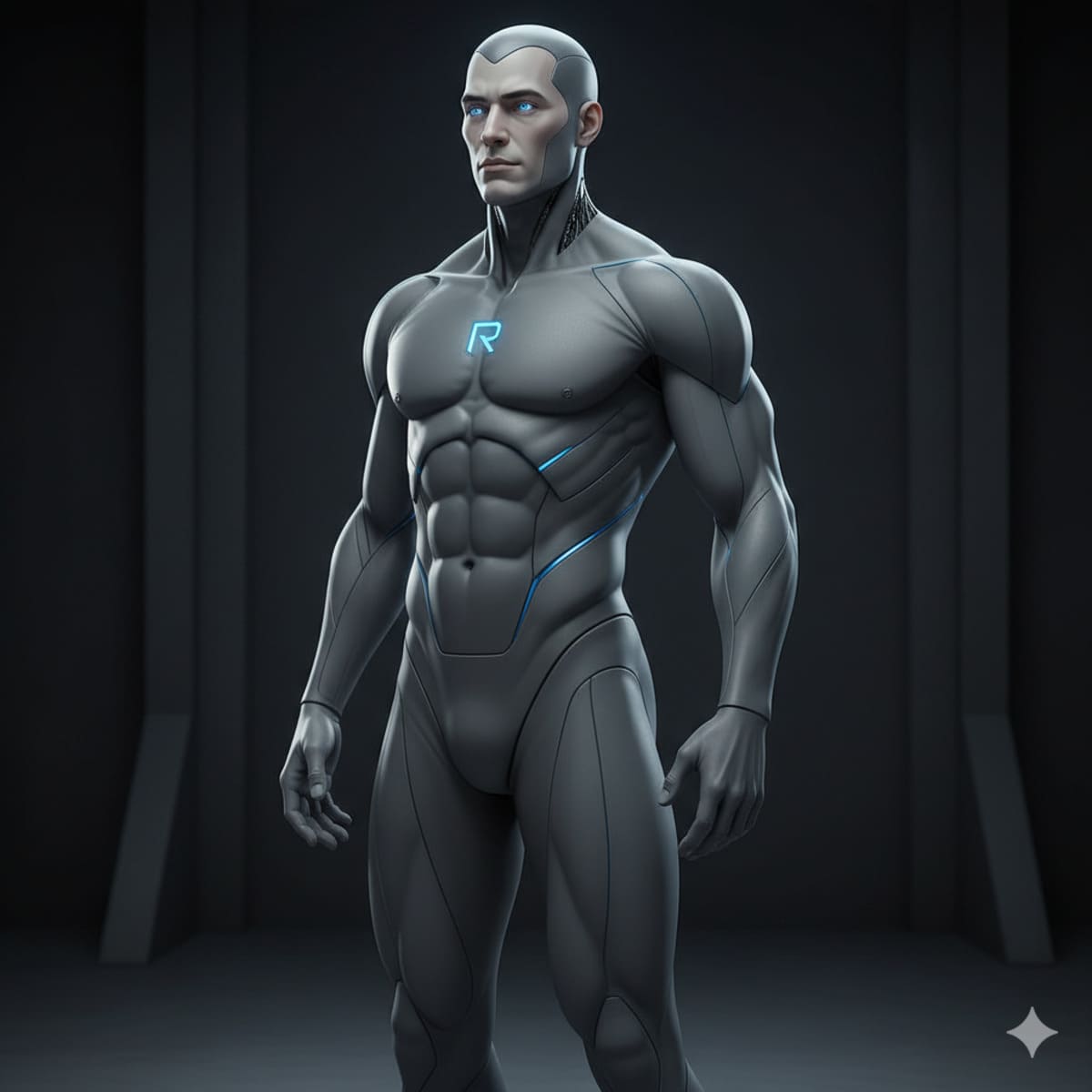
Robojit is a 7-foot synthetic humanoid — calm, restrained, intelligent.
His matte graphite body, subtle blue energy accents, and expressive but non-human face establish him as something distinct from both machines and humans. He is not armored. Not aggressive. Not cinematic spectacle.
He is composed power.
By locking his silhouette, proportions, and material language, the project now has a stable visual anchor for every future panel, scene, and composition.
Victorson: Disciplined but Conflicted
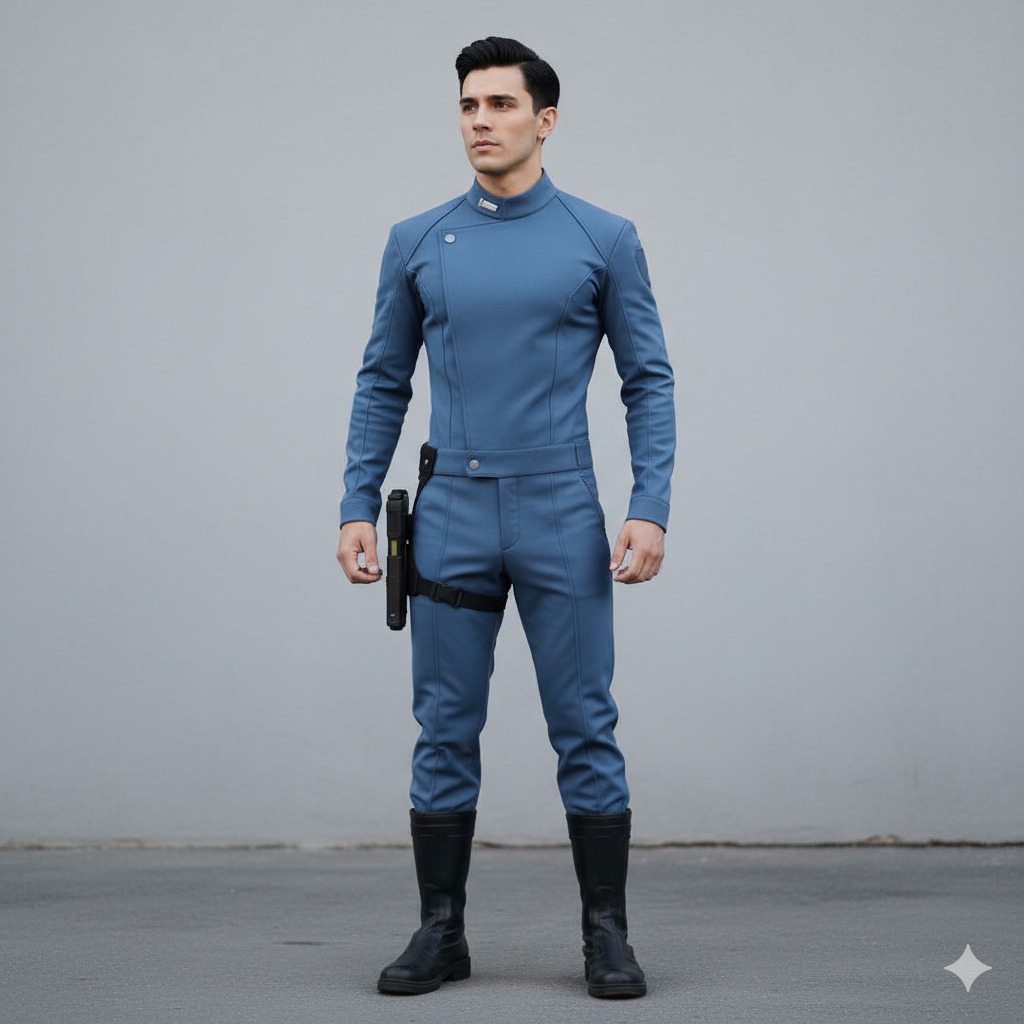
Victorson, at 22 years old and 6 feet tall, represents the human counterpoint.
Balanced athletic build. Thoughtful expression. Light futuristic combat attire in deep blue. A compact energy sidearm.
He is trained — but still evolving.
Unlike Robojit’s stillness, Victorson carries visible internal tension. His visual energy is structured yet human. This contrast establishes narrative friction before a single dialogue line is written.
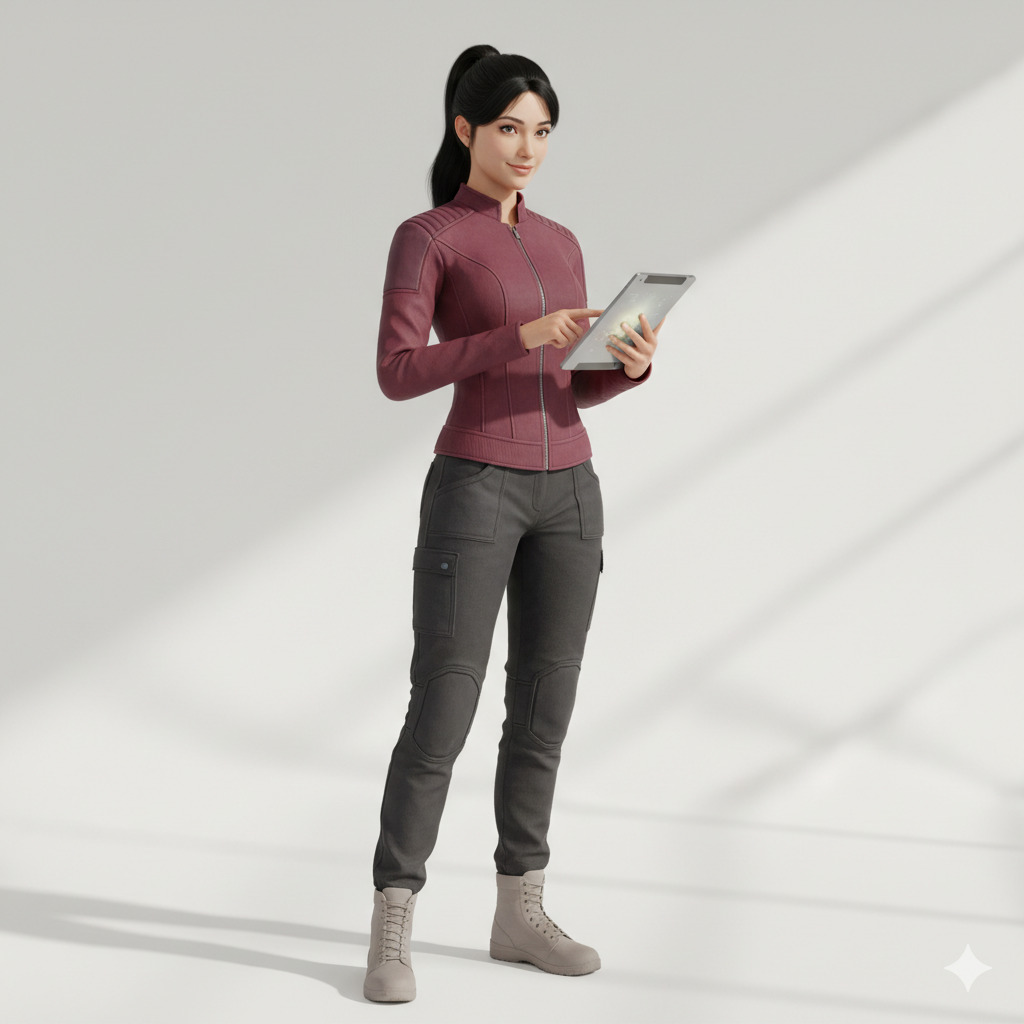
Ginnie: Playful but Perceptive
At 21 years old and 5 feet 8 inches tall, Ginnie completes the emotional triangle.
Soft-featured but agile. Black ponytail. Muted crimson jacket with charcoal tactical trousers. A slim futuristic tablet in her right-dominant grip.
She is hybrid — tech intelligence and field readiness.
Her presence introduces motion and subtle unpredictability. Where Robojit anchors and Victorson weighs responsibility, Ginnie reads between the lines.
The AI-Assisted Discipline
Each character went through iterative refinement:
-
Full-body framing corrections
-
Hand dominance stabilization
-
Color hierarchy adjustments
-
Removal of unintended stylistic drift
-
Canonical “Lock Sheet” documentation
This process illustrates something important:
AI is not replacing creative direction.
It is operating within defined narrative architecture.
The human author defines constraints.
The system assists within those boundaries.
Toward the Graphic Novel Prototype
With the three core characters stabilized, the project can now move toward:
-
Group composition testing
-
Environmental world-building
-
Sequential panel experimentation
-
Early graphic novel prototype pages
The goal is not rapid generation.
It is controlled expansion.
By locking identity before scaling output, Robojit and the Sand Planet continues to evolve as an AI-assisted but author-driven narrative universe.
The pipeline itself remains an ongoing experiment — refining how generative tools can support structured, long-form storytelling without eroding character consistency.
The next phase will extend this foundation into scene construction and visual narrative testing.
The Sand Planet is no longer conceptual.
It is beginning to take shape.
About Robojit and the Sand Planet
Robojit and the Sand Planet is an original, creator-owned science-fiction franchise developed by mediapreneur Rakesh Raman. Conceived as a long-form narrative universe, the project explores themes of intelligence, power, restraint, and identity through the lens of human and synthetic coexistence.
The Robojit initiative is currently being developed through an AI-assisted production pipeline, combining human authorship with emerging generative tools for visual prototyping, storytelling experiments, and transmedia exploration. The pipeline is an ongoing exercise and continues to evolve with each stage of development.
Robojit Website | IMDb | FilmFreeway | ISA | YouTube | Twitter (X) | Facebook