Industry Impact Report: Implications of the Warner Bros. Discovery-Paramount Merger
RMN Stars Report Highlights:
✅ Warner Bros. Discovery stockholders voted overwhelmingly on April 23, 2026, to approve the merger agreement with Paramount Skydance.
🎭 More than 4,369 film and television professionals, including over 75 Academy Award winners and nominees, have signed an open letter opposing the deal due to concerns regarding job losses and reduced creative diversity.
🏙️ New York City Mayor Zohran Kwame Mamdani has formally opposed the transaction, warning it would put thousands of local jobs at risk and lead to higher streaming bills for consumers.
📅 The multi-billion-dollar transaction is currently expected to close in the third quarter of 2026, provided it receives all necessary regulatory clearances and meets other customary closing conditions.
By Rakesh Raman
New Delhi | April 25, 2026
1. Strategic Overview: The Final Frontier of Media Consolidation
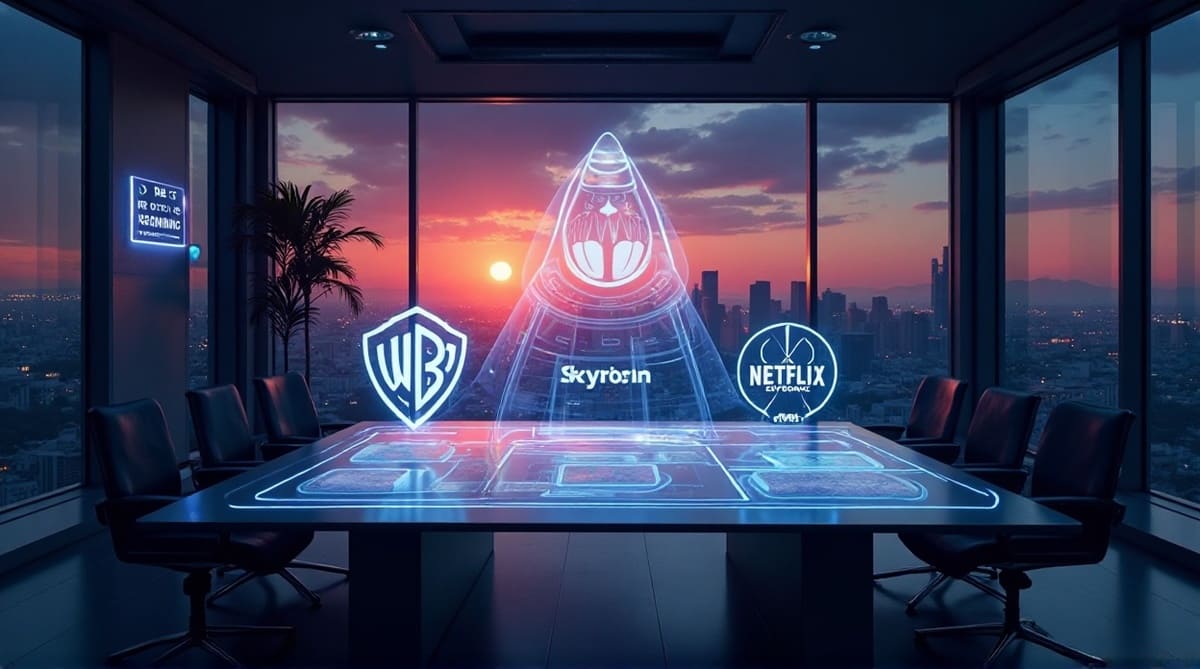
The proposed $83 billion merger between Warner Bros. Discovery (WBD) and Paramount Skydance marks the definitive “final frontier” in a multi-decade trend of cumulative industry concentration. This transaction follows a period of intense volatility, including a contested $83 billion bid from Netflix that signaled the aggressive pursuit of market dominance by streaming leaders.
As WBD stockholders moved to approve the Paramount Skydance deal in April 2026, the industry faced a strategic tipping point: the reduction of major U.S. film studios from five to just four. This consolidation does not merely represent a change in ownership; it fundamentally alters the competitive landscape, creating a high-barrier-to-entry market that threatens the long-term viability of the independent sector.
This report evaluates the structural threats this merger poses to the sustainability of the creative community and the integrity of American media. By analyzing the transaction through the lens of antitrust economics, we detail how the centralization of production and distribution power endangers narrative diversity and independent business models.
While the deal is framed by leadership as a necessity for “industry leadership,” our analysis suggests that without significant regulatory intervention, the merger will irreversibly compromise the industry’s health and its status as a vital democratic institution.
2. Market Concentration and the Erosion of Competitive Diversity
Effective market competition is a prerequisite for both economic efficiency and the maintenance of a healthy democracy. In the sector of free media, competition prevents the emergence of a corporate gatekeeper capable of controlling the public’s access to information and entertainment. When a market undergoes extreme vertical integration, the resulting entity gains the power to stifle innovation and exclude smaller rivals from essential infrastructure.
🔊 Warner Bros. Discovery-Paramount Merger: Audio Analysis
Warner Bros. Discovery CEO David Zaslav has characterized the merger as the path toward creating a “leading, next-generation media and entertainment company.” However, from a strategic perspective, this “behemoth”—a term used by WGA President Michele Mulroney to highlight the deal’s destructive potential—would wield unprecedented monopsony power.
This dominance allows the merged entity to dictate terms across the entire content supply chain. The “So What?” of this tremendous leverage is the ability to enforce “bundling” on consumers and the strategic use of a massive content library to starve independent streaming platforms of licensed material. By centralizing editorial and economic power, the combined company can prioritize the interests of a small group of powerful stakeholders over the broader public good.
Consolidation-Driven Industry Contractions
The following sectors of the media economy face immediate structural risk from increased concentration:
- Independent Distribution Networks: The disappearance of rival studios eliminates the primary paths to market for non-conglomerate content, effectively rendering independent work “invisible.”
- International Sales Markets: The collapse of the international sales market prevents independent creators from securing the bridge financing necessary to bypass the major studio system.
- Theatrical Exhibition Viability: A systemic reduction in film volume directly threatens the occupancy rates and financial sustainability of theaters nationwide.
- Consumer Pricing and Subscription Affordability: The elimination of competitive pressure historically enables price hikes, exacerbating the current consumer affordability crisis while reducing choice.
As these market mechanics consolidate, the primary casualty is the mid-budget sector, which sustains the industry’s creative pipeline.
3. The Crisis of Creative Production: Mid-Budget Films and Independent Viability
The mid-budget film has historically served as the primary training ground for creative professionals and the backbone of industry diversity. These projects allow for narrative experimentation and the development of new intellectual property (IP). The current wave of consolidation, however, accelerates a strategic narrowing of the types of stories that receive financing, as the merged entity prioritizes “world-famous franchises” and tentpole releases over original, character-driven storytelling.
This prioritization has already contributed to a steep decline in the total volume of films produced. By focusing capital on a small number of massive global properties, the industry loses its capacity for creative risk-taking, leaving independent businesses without the scale required to compete for distribution slots or marketing visibility. This contraction represents a fundamental threat to the industry’s ecosystem, ensuring that only the most “safe” or derivative narratives reach a global audience.
Structural Threats to Independent Production
| Threat Category | Mechanic of Decline | Long-term Ecosystem Impact |
| Financing | Collapse of the international sales market. | Sharp reduction in capital for diverse or non-franchise stories. |
| Distribution | Erosion of independent networks and theatrical windows. | Narrative homogenization; independent films lack viable market access. |
| Intellectual Property | Myopic focus on “world-famous” legacy franchises. | Stagnation of original IP; fewer entry points for new creators. |
| International Reach | Centralization of global rights within one entity. | Weakening of the industry’s status as America’s premier cultural export. |
The contraction of production volume does not merely limit content; it creates a structural surplus of labor that the merged entity can exploit to suppress professional compensation.
4. Labor Sustainability and the Suppression of Professional Compensation
The human cost of this merger extends to tens of thousands of media workers and small businesses embedded in local economies. From an economist’s perspective, the merger creates a buyer concentration problem. When the number of potential employers for specialized creative labor drops from five to four, the combined entity gains significant monopsony power to suppress wages and worsen working conditions.
This leverage allows the “media behemoth” to eliminate meaningful profit participation for writers and filmmakers, as there are fewer rival studios to offer competitive, participation-heavy deals. The suppression of compensation is accompanied by a degradation of professional standards, as workers have less bargaining power to protect their rights and livelihoods.
Key Labor Impacts:
- Compensation Suppression: The combined entity uses its market dominance to eliminate profit-sharing models, utilizing buyer concentration to reset the baseline for creative wages.
- Credit Integrity: Continued consolidation is structurally linked to the weakening of screen credit standards, which are essential for the career advancement and professional standing of creators.
- Employment Instability: The merger triggers a high risk of systemic job losses not only within the principal companies but across the small businesses and independent vendors that support the production ecosystem.
This destabilization of the workforce is exacerbated by the growing threat to the integrity and independence of the information these workers produce.
5. Democratic Risks: Journalism, Documentaries, and Free Expression
The strategic importance of media independence to the First Amendment cannot be overstated. When massive corporations consolidate, the public’s right to know is compromised by the potential for corporate or political influence to color editorial decisions. The prospect of placing CNN and CBS News under a single corporate roof raises severe alarms regarding the concentration of editorial control.
Strategic depth is added to these concerns by the political context of the merger participants. David Ellison, the leader of Paramount Skydance, is a major supporter of President Trump, who has publicly commented on his intent to be involved in decisions regarding large media acquisitions like the Warner Bros. deal. This intersection of corporate consolidation and political alignment creates a systemic risk for newsroom independence and the potential suppression of free expression to curry political favor.
Threats to Documentary and Nonfiction Storytelling:
Analysis from the International Documentary Association (IDA) identifies a three-point threat to the nonfiction sector:
- Absorption of Vital Platforms: The potential absorption of HBO Max (Max)—a premier platform for investigative and niche nonfiction—into a conglomerate with little incentive to protect non-commercial content.
- Consolidation of Broadcast Archives: Documentarians rely on accessible broadcast archives for historical accuracy. Consolidating these archives increases costs and limits access for independent creators.
- Concentration of Editorial Power: A single corporate entity gains the power to determine “which American stories get told,” effectively centralizing the social and historical record.
6. Regulatory Landscape and the Movement for Intervention
Opposition to the WBD-Paramount merger has mobilized a rare, unified front consisting of 4,369+ signatories, including more than 75 Academy Award winners and nominees. This coalition characterizes the transaction not as a standard business move, but as a violation of the rule of law and a threat to the foundations of free media.
California Attorney General Rob Bonta, alongside other state Attorneys General, has initiated a scrutiny of the deal, investigating it for potential corruption and consumer harm. These regulators are particularly concerned with how the merger might violate antitrust laws by reducing competition, increasing consumer costs, and eliminating jobs in local economies like New York City, where Mayor Zohran Kwame Mamdani has also voiced formal opposition.
Coalition of Opposition
| Entity | Primary Reason for Opposition |
| Writers Guild of America (WGA) | Suppression of writer compensation and worsened working conditions. |
| Free Press | Threat to newsrooms, journalism, and trustworthy information. |
| International Documentary Association (IDA) | Concentration of editorial power and loss of documentary platforms. |
| Future Film Coalition | Threat to the national ecosystem of independent businesses and theaters. |
| Committee for the First Amendment | Characterization of the deal as a destructive threat to free speech. |
While internal corporate milestones have been met, the movement for intervention continues to gain traction as the Q3 2026 closing window approaches.
7. The Future of the American Cultural Export
The Warner Bros. Discovery-Paramount merger represents a fundamental structural realignment of the American creative ecosystem. While stockholders have overwhelmingly approved the transaction to “unlock value,” the long-term sustainability of the creative community remains in the hands of regulators. The shift toward a market dominated by a few “behemoths” threatens to erode the competitive diversity that has historically made the American media industry the world’s leading cultural export.
The industry’s survival depends on a healthy marketplace that rewards narrative risk and maintains a diverse field of competing buyers for creative labor. Without thoughtful regulation and rigorous antitrust enforcement to block this consolidation, the independence of American media will be grievously compromised. Preserving the industry from the effects of monopsony power and vertical integration is essential to protecting its democratic function and its future as a vibrant, global cultural force.
By Rakesh Raman, who is a national award-winning journalist and social activist. He is the founder of the humanitarian organization RMN Foundation which is working in diverse areas to help the disadvantaged and distressed people in the society.