Bollywood’s Ikkis Disclaimer, Manufactured Hatred, and the Smokescreen of Indian Democracy
Bollywood’s growing obsession with nationalist, Pakistan-centric conflict films must be viewed against this backdrop. As filmmakers struggle with originality, they increasingly rely on “cheap formula films” centred on exaggerated military conflicts and animosity with Muslim-majority Pakistan.
By Rakesh Raman
New Delhi | January 6, 2026
A suddenly inserted disclaimer in the Bollywood film Ikkis has triggered widespread debate—not merely about cinematic representation, but about how India’s ruling regime allegedly weaponises popular culture to manufacture hatred, distract citizens, and conceal the deeper crisis of electoral manipulation through Electronic Voting Machines (EVMs).
Released on January 1, Ikkis stars the late Dharmendra along with debutants Agastya Nanda and Simar Bhatia. About a week after its release, filmmakers quietly added a striking disclaimer that went viral on social media. The note insists that the film’s portrayal of a compassionate Pakistani Brigadier—played by Jaideep Ahlawat—is merely an “exception,” while broadly characterising Pakistan and its military as inherently untrustworthy and inhumane.
The disclaimer states that Pakistan’s armed forces have “repeatedly and openly violated the Geneva Convention,” engaged in “cruel and inhuman” conduct against Indian soldiers and civilians, and sponsored terrorism—claims for which no independent evidence is cited. It further urges Indian citizens to remain perpetually alert against the neighbouring country.
The timing and nature of this disclaimer raise serious questions. It was not part of the original release, but was added abruptly after public screenings had already begun. Critics argue that the insertion bears the hallmark of political coercion rather than creative choice. In all probability, the Modi regime pressured the filmmakers to neutralise any portrayal of humanity on the Pakistani side and replace it with a sweeping narrative of hostility. If true, this represents not artistic freedom but state-enforced propaganda.
More troubling is the broader context in which such cinematic messaging operates. There is no verifiable evidence linking Pakistan to terror attacks inside India in recent years. After the April 2025 Pahalgam attack, in which 26 people were killed, the Modi government once again blamed Pakistan without presenting proof. International bodies—including the World Bank, International Monetary Fund (IMF), Financial Action Task Force (FATF), and the United States—dismissed these allegations and, instead, continued financial engagement with Pakistan. This international response directly contradicts the narrative propagated domestically through political speeches and now, increasingly, through films.
🔊 बॉलीवुड फिल्म ‘इक्कीस’ में अचानक जोड़े गए एक विवादास्पद डिस्क्लेमर पर ऑडियो विश्लेषण
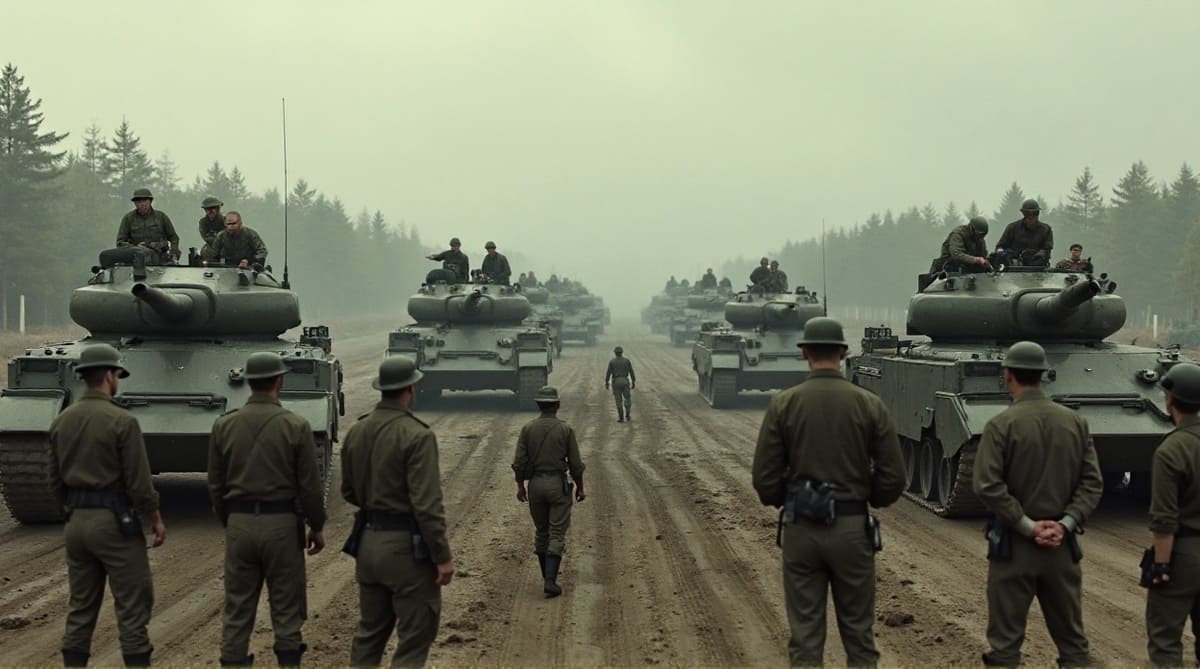
Bollywood’s growing obsession with nationalist, Pakistan-centric conflict films must be viewed against this backdrop. As filmmakers struggle with originality, they increasingly rely on “cheap formula films” centred on exaggerated military conflicts and animosity with Muslim-majority Pakistan. Titles such as Ikkis, Border 2, Dhurandhar (2025), Dhurandhar 2 (scheduled for March 2026), Battle of Galwan (scheduled for April 2026), and Love & War (expected late 2026) follow a clear pattern. These films reinforce the ruling regime’s narrative, appeal to the majority Hindu audience, and indirectly stigmatise Muslims living in India.
This alignment is not accidental. Prime Minister Narendra Modi frequently amplifies anti-Pakistan rhetoric, particularly before elections, often accompanied by claims of military action or national security threats. Following the Pahalgam attack, the Modi government launched “Operation Sindoor” on May 7, 2025, again accusing Pakistan without evidence. Opposition leaders, including senior Congress leader and former Home Minister P. Chidambaram, alleged that the attackers were homegrown and even accused the Modi regime of involvement in the incident itself. These allegations gained traction because the attackers were never apprehended, and no independent investigation was permitted.
According to critics, such episodes serve as smokescreens—manufactured crises designed to divert public attention from systemic failures and, crucially, from alleged election frauds conducted through manipulated EVMs. The Bihar Assembly election scheduled for November 2025 added urgency to this strategy. It was alleged that the Pahalgam incident and the subsequent military rhetoric were used to emotionally mobilise voters and suppress scrutiny of electoral integrity.
The use of cinema as a political instrument complements this strategy. While citizens debate film disclaimers, military heroism, and national pride, the deeper question of whether India still conducts free and fair elections remains sidelined. Modi’s repeated vulgar monologues against Pakistan and Muslims, critics argue, are not about national security but about sustaining power by distraction.
This pattern is not new. Modi’s past—including his alleged role in the 2002 Gujarat pogrom, documented in the 2023 BBC documentary India: The Modi Question, which was later banned in India—continues to cast a long shadow. His U.S. visa was revoked for years due to these allegations. Yet within India, uncomfortable questions are buried beneath nationalism, propaganda, and now cinematic narratives.
Growing demands for independent, United Nations–supervised investigations into major incidents—including the 2002 Godhra train burning, the Gujarat pogrom, the 2008 Mumbai attacks, the 2019 Pulwama attack, the 2020 Delhi violence against Muslims, the death of Judge Loya, and the 2025 Pahalgam attack—have been systematically ignored by the Modi regime. Instead, dissent is branded as anti-national, and alternative narratives are silenced.
In December 2025, the Congress launched its “Vote Chor Gaddi Chhod” campaign, directly accusing Modi of repeated election thefts and demanding his resignation. Yet critics argue that such campaigns remain rhetorical, lacking sustained street resistance or a singular focus on abolishing EVMs in favour of ballot papers.
The Ikkis disclaimer, therefore, is not an isolated controversy. It is another data point in a larger pattern where cinema, media, military rhetoric, and manufactured hatred operate together to mask what the Smokescreen project identifies as the core engine of India’s democratic collapse: election manipulation through EVMs.
As long as public discourse is hijacked by fear, nationalism, and cinematic propaganda, elections may continue to be held—but democracy itself will remain little more than a carefully staged illusion.
By Rakesh Raman, who is a national award-winning journalist and social activist. He is the founder of a humanitarian organization RMN Foundation which is working in diverse areas to help the disadvantaged and distressed people in the society.