
THE SMOKESCREEN: Elias Thorne Leaves Safety Behind
The third sequence of THE SMOKESCREEN marks a decisive turning point. Having exposed evidence challenging Astraea’s official election narrative, investigative journalist Elias Thorne realizes the investigation can no longer remain hidden inside a safe house—and neither can he.
RMN Stars THE SMOKESCREEN Desk
New Delhi | August 6, 2026
Every political thriller reaches a moment when investigation gives way to survival. In THE SMOKESCREEN, that moment arrives quietly.
The third sequence, titled Flight, contains very little dialogue, yet it fundamentally changes the direction of the story. Following the publication of his investigation into Astraea’s election results and the anonymous threats that followed, journalist Elias Thorne understands that remaining in one place has become an unacceptable risk.
“Some investigations end with publication. Others begin the moment you leave the room.”
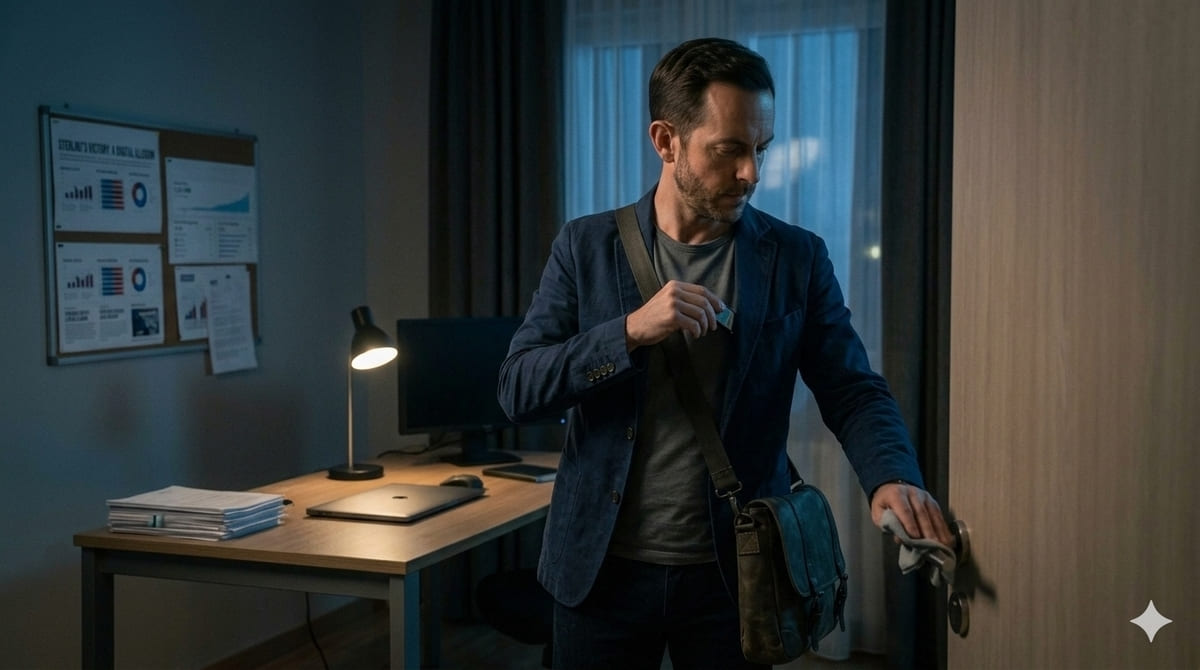
Inside the dimly lit safe house that has served as his temporary newsroom, Elias begins preparing to leave. His movements are deliberate and methodical. He wipes down his laptop, carefully eliminating traces of his work before closing it. From a concealed hiding place, he retrieves a small encrypted storage drive containing the investigation that has already attracted international attention.
These actions reveal as much about the character as any conversation could. Elias does not respond with panic or impulsiveness. Instead, he behaves like someone who anticipated this possibility long before it became reality. The sequence emphasizes preparation over spectacle, reminding the audience that experience often expresses itself through quiet discipline rather than dramatic gestures.
“The safest place in Astraea is no longer safe.”
The room itself has become a silent witness to the investigation. Election charts, statistical analyses, handwritten notes, and digital evidence remain behind as Elias prepares to abandon the only secure location he has known since the story began. The audience senses that he is leaving more than a workspace. He is leaving the last place where he still controlled the environment around him.
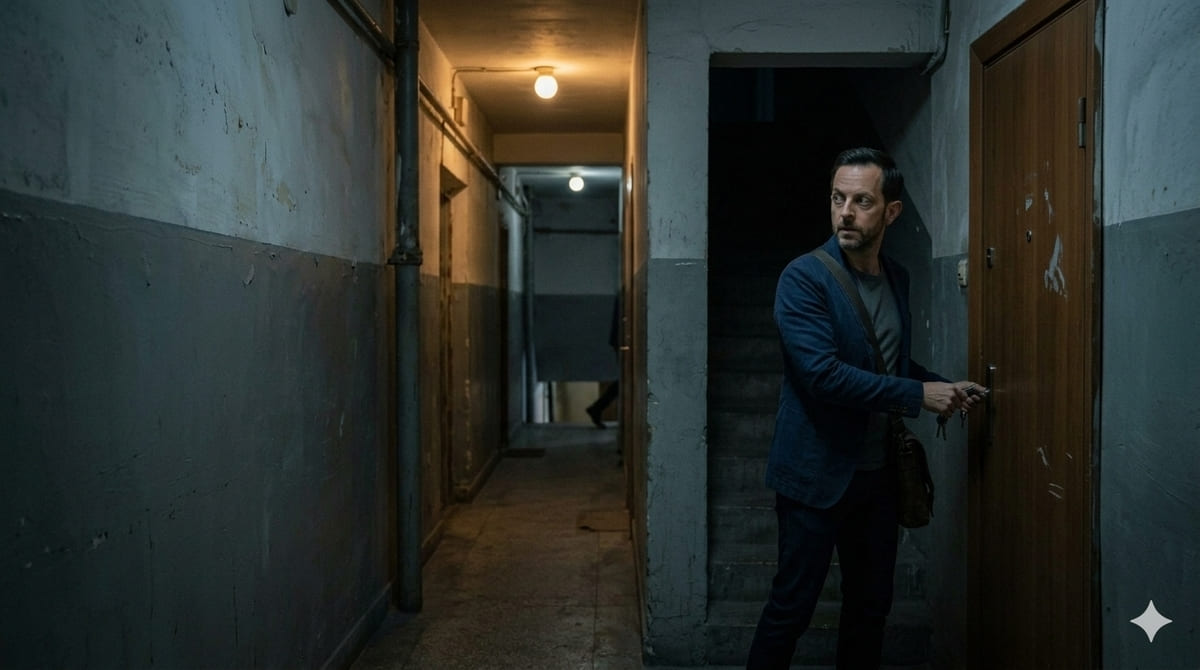
The tension intensifies through sound rather than action. Elias pauses at the apartment door, listening carefully as distant footsteps echo through the building. No faces are shown. No confrontation occurs. Yet uncertainty fills every moment because neither Elias nor the audience knows whether the sounds represent ordinary neighbours or something far more dangerous.
He quietly locks the door behind him and disappears into the stairwell.
That simple image symbolizes one of the film’s defining transitions. The investigation is no longer confined to research, documents, and computer screens. It has entered the physical world, where every movement carries risk and every decision may have consequences.
From a storytelling perspective, Flight deliberately slows the pace after the dramatic conclusion of the previous sequence. Rather than escalating through action alone, the film allows tension to emerge from anticipation. The audience understands that Elias has crossed a point of no return, even though no direct confrontation has yet taken place.
This restrained approach reflects the broader style of THE SMOKESCREEN, which seeks to build suspense through observation, atmosphere, and psychological pressure rather than relying solely on conventional action sequences. The greatest danger often lies not in what is seen, but in what remains unseen.
THE SMOKESCREEN demonstrates a practical application of the AI-assisted, human-authored filmmaking workflow discussed in the research report Inevitability of Artificial Intelligence in Films — The Way Forward. While AI assists with visualization, concept exploration, and production planning, the story, screenplay, editorial direction, and creative decisions are authored and directed by Rakesh Raman.
Elias has left the safe house, but the investigation is only beginning to reveal the forces determined to stop it. Ahead lies a journey where every public place may conceal new threats—and unexpected allies.
To be continued…