
From Art to Apparatus: How Batwara 1947 and the ‘Nagpur Pivot’ Signal the End of Independent Indian Cinema
The Indian film industry has undergone a systemic “Gleichschaltung,” or forcible coordination, transitioning from a hub of creative independence into a clinical instrument of state-managed perception. Established family fiefdoms are cravenly trading their artistic sovereignty for political protection and administrative immunity, effectively weaponizing their legacies to serve the regime. Through the systematic laundering of historical narratives and box office data, Bollywood now functions as a cultural smokescreen for the country’s rapid institutional capture.
By Rakesh Raman
New Delhi | June 9, 2026
The Transformation of Batwara 1947: Dynastic Preservation
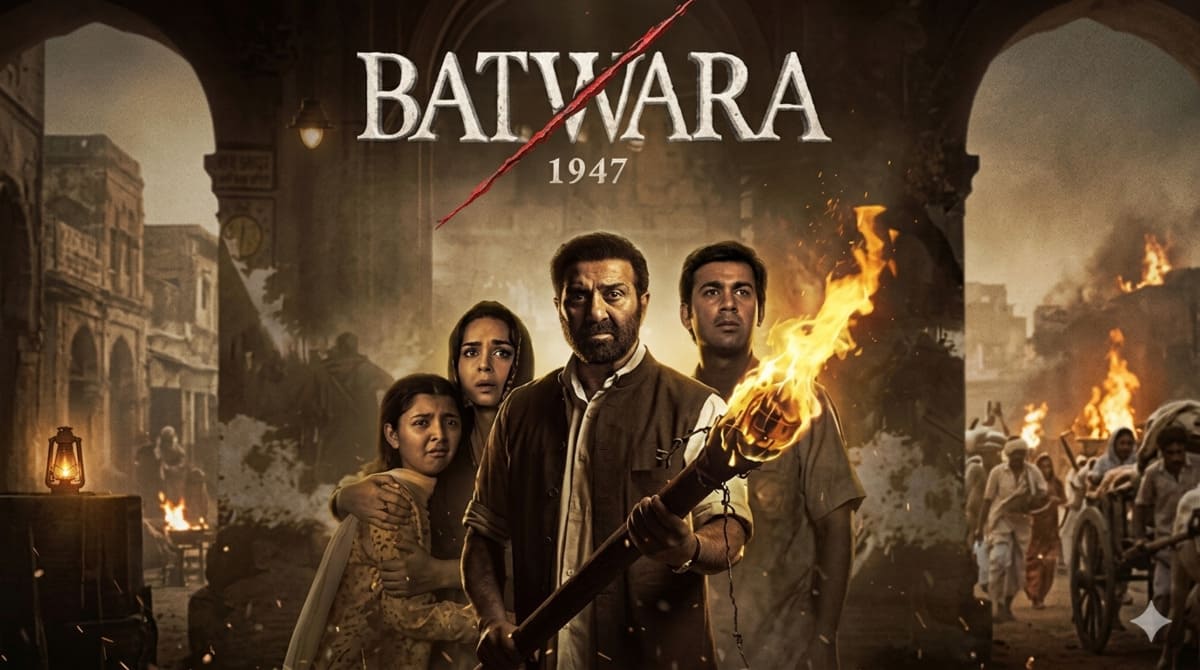
In the current landscape of Indian cinema, a film’s title is a strategic signal of ideological alignment. The transition of the upcoming period drama Batwara 1947—betrays the industry’s craven pivot. Originally titled Lahore 1947, the project was rebranded to fit a more regime-friendly nationalist template. While Aamir Khan Productions ostensibly explores the human turmoil of Partition, the production’s strategic timing—slated for release on August 14, 2026—reveals its function as a tool for state-sanctioned mobilization.
This project is a primary vehicle for “Family Fiefdom” preservation. By weaponizing the Deol lineage—featuring Dharmendra’s son Sunny Deol in the lead and his grandson Karan Deol in a featured role—the industry ensures the continuation of a non-meritocratic hegemony. This multi-generational involvement is a calculated effort to leverage dynastic prestige in exchange for political relevance.
The Dynastic Exchange: Family fiefdoms in Bollywood are no longer competing for creative excellence; they are weaponizing their lineage to trade ancestral integrity for administrative immunity. By becoming the faces of state PR machinery, these dynasties use political compliance to prop up failing cultural capital and insulate themselves from the risks of a truly meritocratic market.
By utilizing three generations of a single family, the production acquires a “veneer of prestige” that legitimizes state-aligned storytelling. This model allows Aamir Khan and the Deol family to insulate themselves from market risks and forensic scrutiny while performing mandatory acts of loyalty. These alliances are not isolated; they are the foundation of an ideological certification process that transforms historical trauma into cultural fuel for contemporary political ends.
The Nagpur Pivot: Ideological Certification
The “Nagpur Pivot” represents a ritualized surrender for the cinematic elite. Artistic freedom is no longer the currency of success; it has been replaced by paramilitary patronage. High-profile pilgrimages to the Rashtriya Swayamsevak Sangh (RSS) headquarters serve as a formal integration into the state’s cultural apparatus.
- The February Integration: In February 2026, industry heavyweights like Karan Johar and Ranbir Kapoor attended the RSS Centenary, signaling that established dynastic powers had accepted the necessity of ideological certification.
- The Strategic Shield: Actor Ranveer Singh’s April 2026 visit to the memorial of RSS founder Keshav Baliram Hedgewar was a forensic defensive maneuver. By securing an audience with RSS chief Mohan Bhagwat, Singh effectively created a “shield” for his film Dhurandhar, which was then under fire for claiming unverified global revenue.
These visits institutionalize the actor as a partner in state-managed perception, securing administrative immunity while narrowing the gap between mass entertainment and state hagiography.
The Nagpur Integration: “The ‘Nagpur Pivot’ is the formal surrender of the cinematic elite to the state’s cultural apparatus. When industry heavyweights visit RSS headquarters, they are not making social calls—they are securing an ideological certification that serves as a shield against forensic scrutiny and the exposure of data currency fraud.
The Architecture of Revisionism: The UFA Blueprint
Modern Indian cinema is increasingly defined by “retconning”—the tactical retrofitting of history to serve modern political objectives. This process of Gleichschaltung follows the 1940s German UFA blueprint, transforming the industry into a state-managed super-corporation. This “Ufi Blueprint” executes three distinct strategies: Dehumanizing Minorities, Manufacturing Cults of Personality, and Hiding Criminality.
Specific projects illustrate this systematic revisionism:
- Aakhri Sawal: A clinical exercise in state-managed history produced by family fiefdoms (Nikhil Nanda and Sanjay Dutt). The film secured a “UA 16+” rating from the CBFC—a sign of regulatory complicity—to position this paramilitary recruitment tool as an educational document.
- Peddi: A “Viksit Bharat” branding vehicle. Lead actor Ram Charan provided the “smoking gun” admission of narrative capture, stating: “Sir, it is about how Viksit Bharat is about empowering of our villages. Waisa hi concept hai Sir.”
- Battle of Galwan (Maatrubhumi): A hagiographic military narrative starring Salman Khan, designed to sanitize complex geopolitical engagements and project an image of undisputed triumph.
The “Viksit Bharat” Paradox
The disconnect between cinematic fiction and the material fragility of the nation is stark:
| Cinematic Narrative (Viksit Bharat) | Ground Reality (Source Data) |
| Empowered, prosperous villages | 80 crore people depend on free food rations to survive. |
| Boundless national opportunity | 2.5 to 3 crore educated youth remain jobless. |
| State-of-the-art infrastructure | 14,000+ student suicides; 9.5 crore people lack basic sanitation. |
The Mechanics of Deception: Box Office Mafia
To maintain the illusion of national consensus, the industry employs “Information Poisoning”—the injection of unverified figures into global tracking systems like Comscore to simulate civilizational triumphs.
A forensic audit of Dhurandhar exposed this data currency fraud. While distributors claimed a global revenue of ₹1,723 Crore ($184.6 Million), researchers identified these figures as unverified estimates. This manufactured success masks the forensic reality of a nation in democratic freefall.
Laundering Consensus: “The ‘Box Office Mafia’ utilizes information poisoning to manufacture the appearance of a unified national consensus. By laundering unverified ghost data through global trackers, the state projects an image of global dominance, even as internal democratic structures undergo systemic collapse and socioeconomic fragility deepens.
The Global Chasm and Democratic Decay
There is a profound strategic disconnect between Bollywood’s “civilizational triumphs” and the assessments of the international community. While domestic audiences are fed revisionist blockbusters, global monitoring bodies are sounding the alarm.
The USCIRF 2026 Annual Report has recommended designating India as a “Country of Particular Concern” (CPC), specifically calling for targeted sanctions on the RSS. Simultaneously, the V-Dem 2026 Democracy Report identifies India as a primary driver of global democratic decay. This creates a paradox where icons like Shah Rukh Khan, Salman Khan, and Aamir Khan perform “mandatory loyalty” through worshipful birthday pledges to the Prime Minister while bowing to an organization the international community seeks to penalize as a global pariah.
As cinema reaches its peak as a tool for state-managed perception, the question remains: can the public still distinguish between an artistic film and a state-managed psychological operation?
By Rakesh Raman, who is a national award-winning journalist and social activist. He is the founder of the humanitarian organization RMN Foundation which is working in diverse areas to help the disadvantaged and distressed people in the society.