
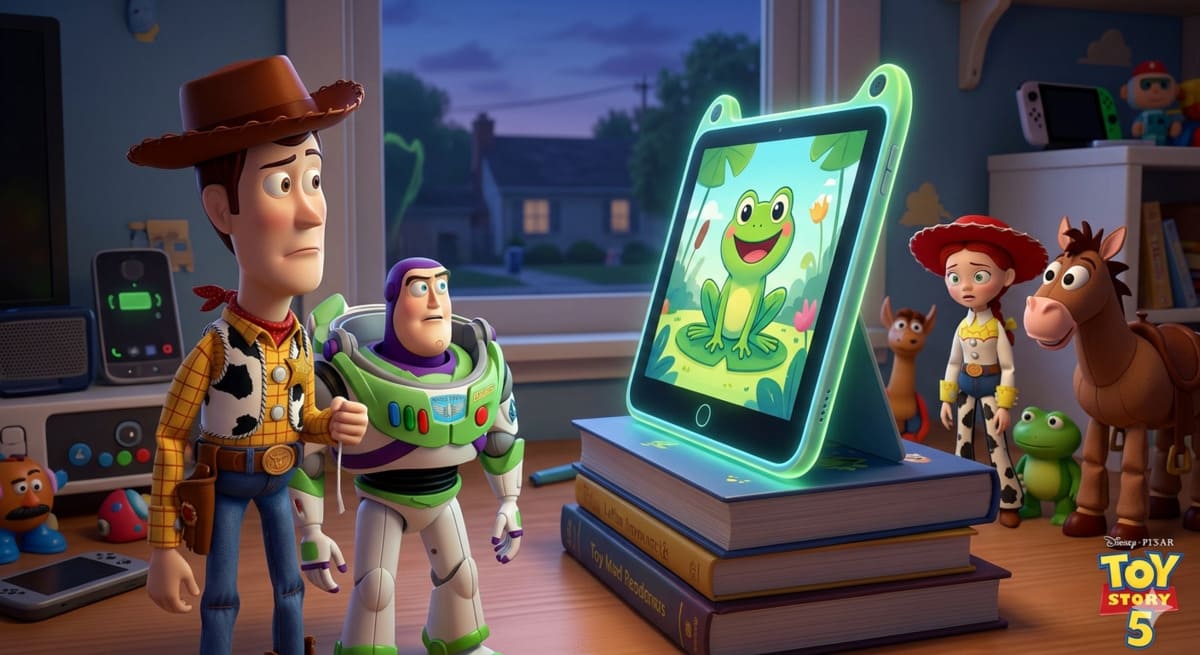
RMN Stars Movie Anticipation Index: Toy Story 5
By focusing the plot on “Toys vs. Electronics,” the production is attempting a topical commentary, but it feels like a tactical distraction from the underlying creative exhaustion of the franchise.
RMN Stars Movie Anticipation Index
New Delhi | May 8, 2026
As Disney and Pixar prepare for the June 19, 2026 release of Toy Story 5, the franchise enters a territory that can only be described as a “Cinematic Circus.” While the original trilogy was hailed for its emotional depth, the ongoing extension of this brand raises a critical question: should there be a regulatory limit on the number of sequels allowed before a project is classified as “Creative Stagnation”?
1. Creative Pedigree: The Five-Ring Circus
Directed by Andrew Stanton, the film attempts to pit traditional toys against modern technology. However, the creative pedigree is hampered by the fact that the audience has already experienced the “final” emotional farewell twice before (in Toy Story 3 and 4). This fifth iteration risks turning the beloved characters into performers in an identical show repeated for the fifth time, lacking the original spark that once defined Pixar.
-
Editorial Score: ⭐⭐ (2/5)
2. Market Necessity: The Case for a “Sequel Censor Board”
In a healthy creative economy, there should arguably be a regulatory body—much like a censor board—tasked with halting monotonous repetitions. Instead of funding fresh, original IPs, the studio is choosing to spend millions in marketing to “rope in” a fatigued audience. The market necessity for a fifth Toy Story is virtually non-existent; it is a product of corporate safety rather than narrative demand.
-
Editorial Score: ⭐ (1/5)
3. Production Integrity: High-Tech vs. High-Heart
While the animation technology continues to reach new heights of photorealism, the forensic audit asks: does the “high-tech” visuals compensate for the “low-risk” storytelling? By focusing the plot on “Toys vs. Electronics,” the production is attempting a topical commentary, but it feels like a tactical distraction from the underlying creative exhaustion of the franchise.
-
Editorial Score: ⭐⭐⭐ (3/5)
4. Legacy Risk: The Law of Diminishing Emotional Returns
The greatest risk is the permanent dilution of the Toy Story legacy. Every unnecessary sequel chip away at the emotional weight of the predecessors. If the film fails to provide a revolutionary new concept, it confirms that the franchise has become a “tired hijink” machine, existing solely to sell merchandise rather than move the cultural needle.
-
Editorial Score: ⭐⭐ (2/5)
Official RMN Stars Movie Anticipation Index: ⭐⭐ (2/5)
Verdict: Toy Story 5 is the ultimate example of “Franchise Over-Extension.” Unless it introduces a radical departure from its set formula, it serves as a reminder that the industry desperately needs a “Regulatory Guardrail” to protect audiences from the infinite loop of monotonous sequels. It is a “Non-Essential” watch for those seeking original cinematic thought.
This analysis is part of our ongoing tracking series. Read our complete framework on the main Movie Anticipation Index hub.
Methodology & Integrity Note: The RMN Stars Movie Anticipation Index is a specialized rating system developed by RMN Stars to evaluate the strategic potential of upcoming cinematic releases. In accordance with the high editorial standards of investigative journalism, this index relies on forensic analysis of production data and market trends to provide an objective assessment.